Profiled metal
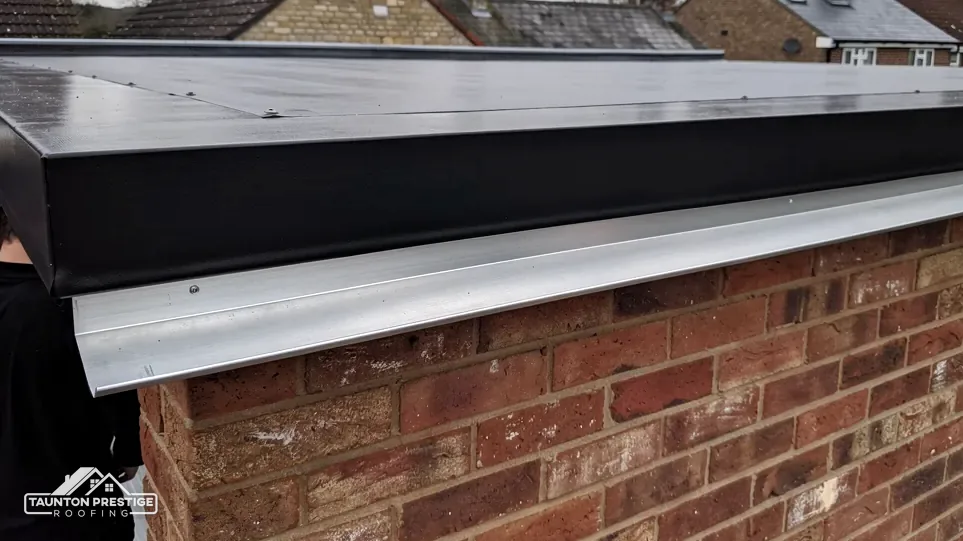
Coated steel or aluminium sheets, screwed through to the purlins below.
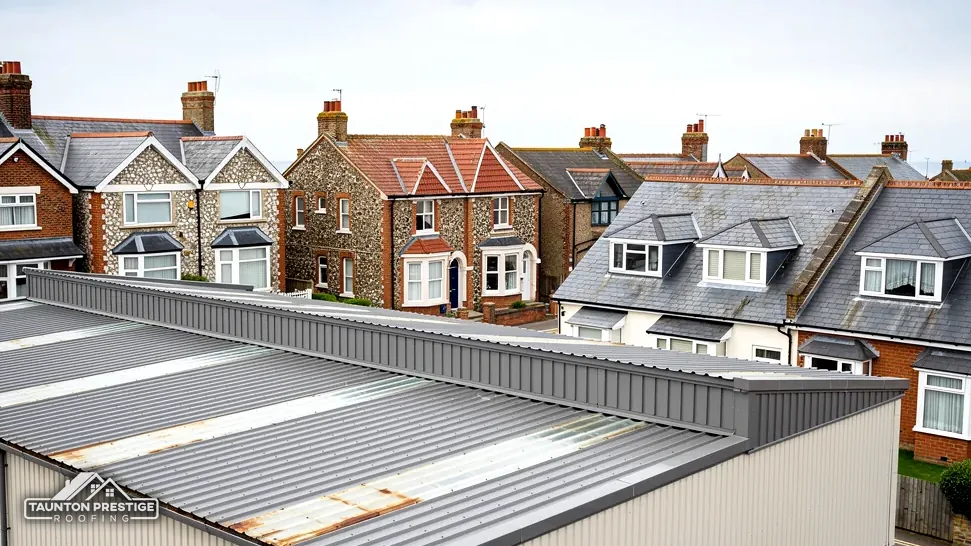
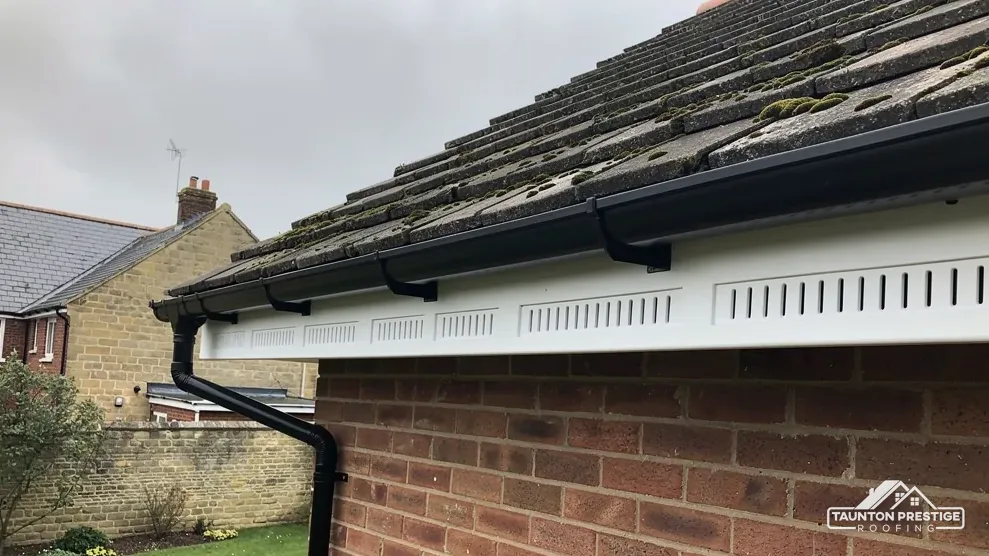
Sheet, membrane and tiled roofs over working buildings.
We survey every roof area on your site, photograph what we find, and plan repairs or a new roof around the way your business runs.
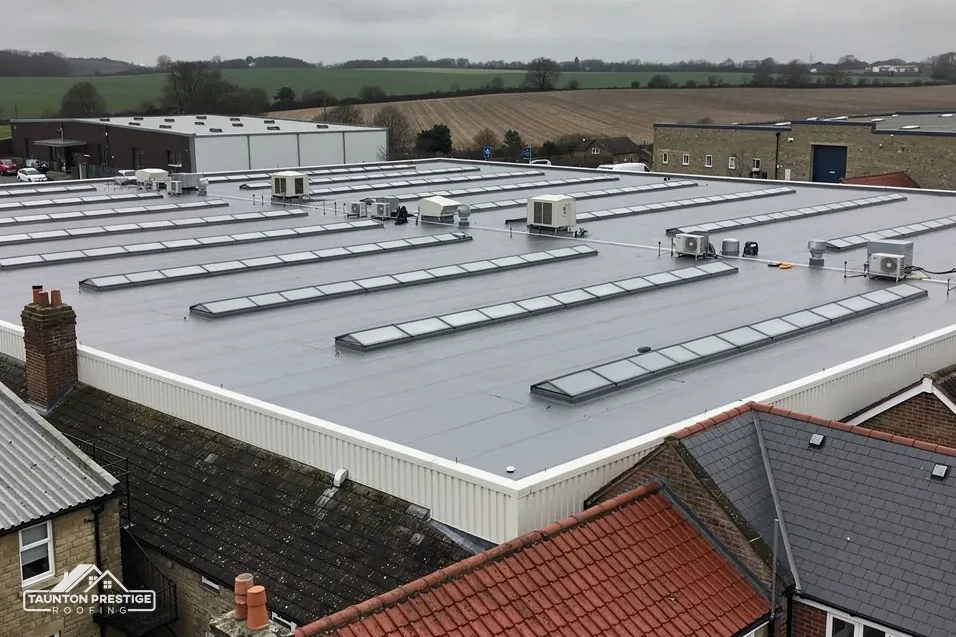
Coated steel or aluminium sheets, screwed through to the purlins below.
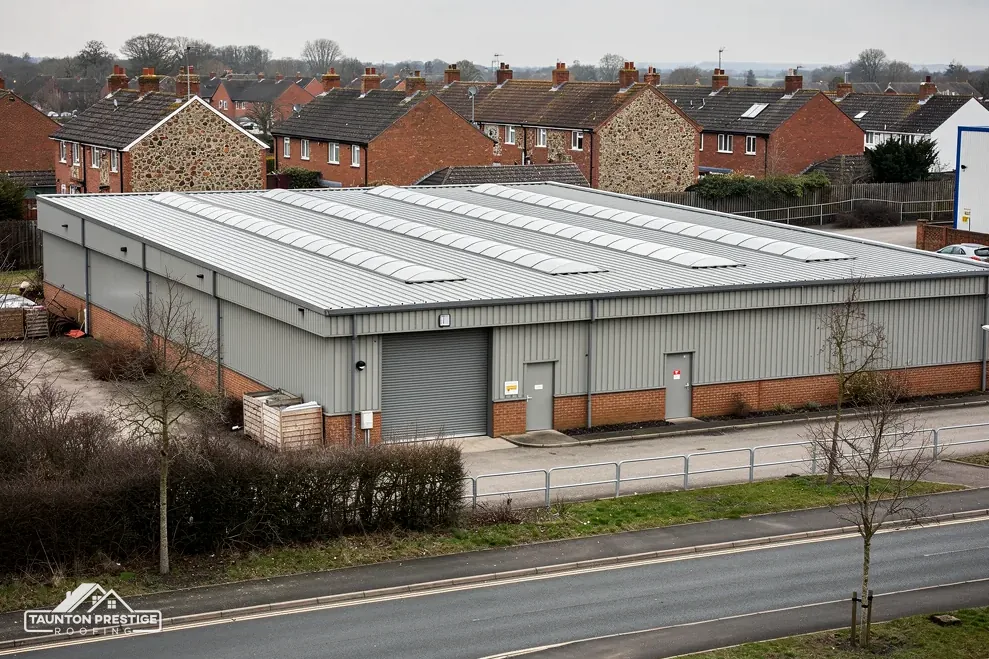
Grey corrugated sheets on farms and older units, sometimes containing asbestos.
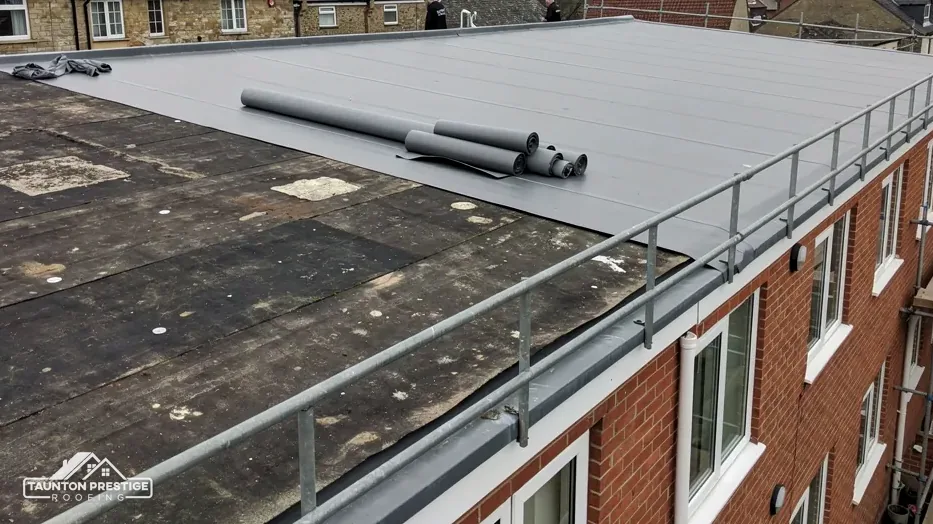
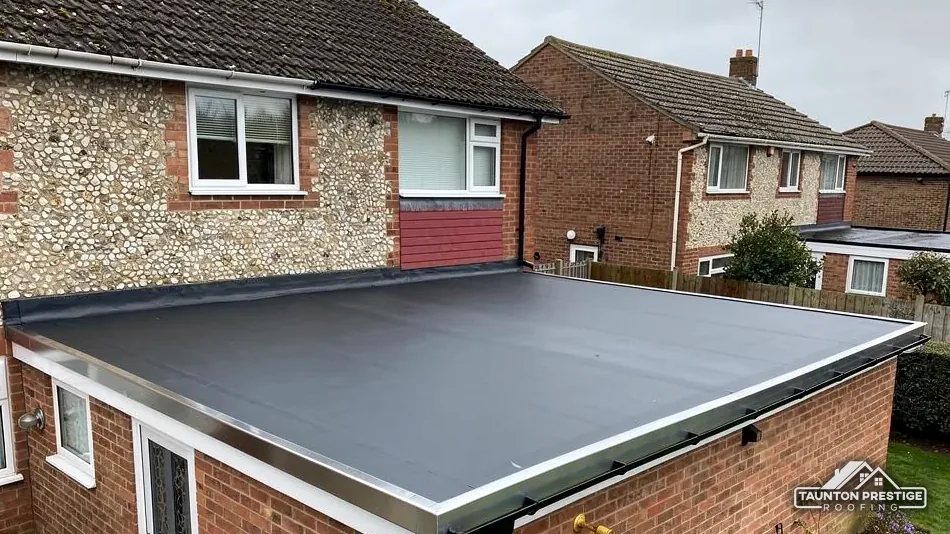
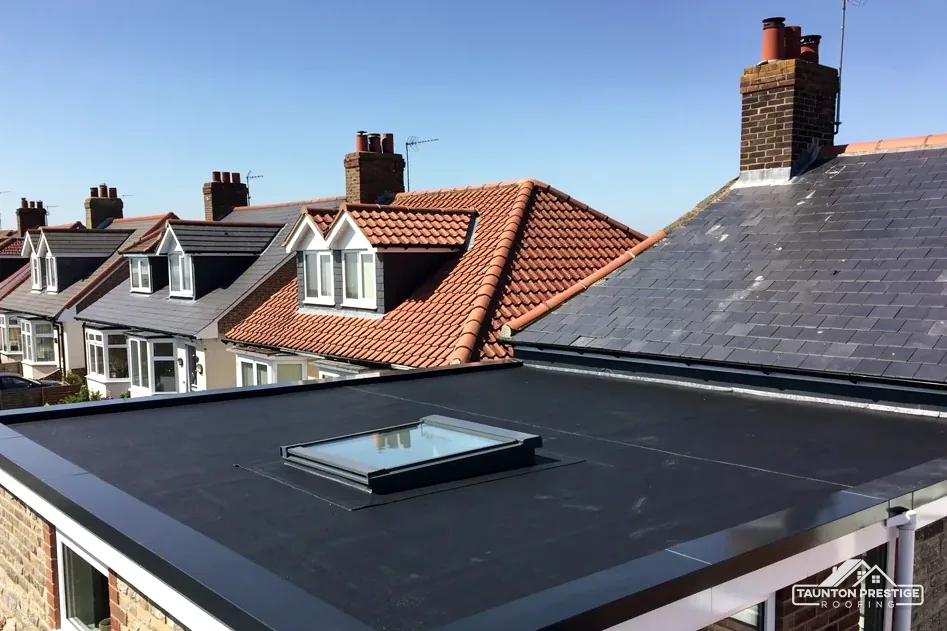
Built-up felt, EPDM, single-ply or GRP over offices and shop extensions.
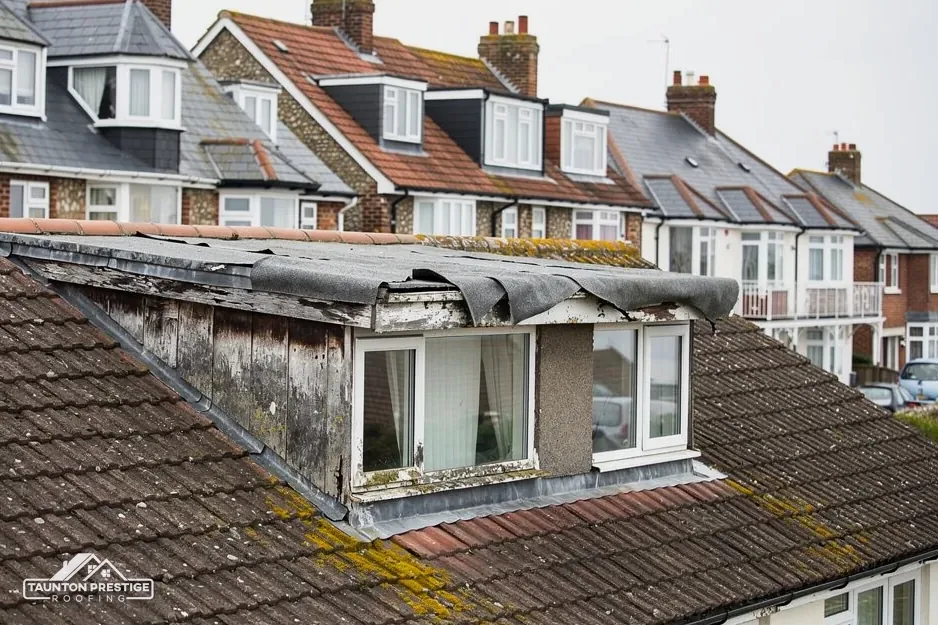 Sheet roof repairsFixings, laps and holed sheets renewed
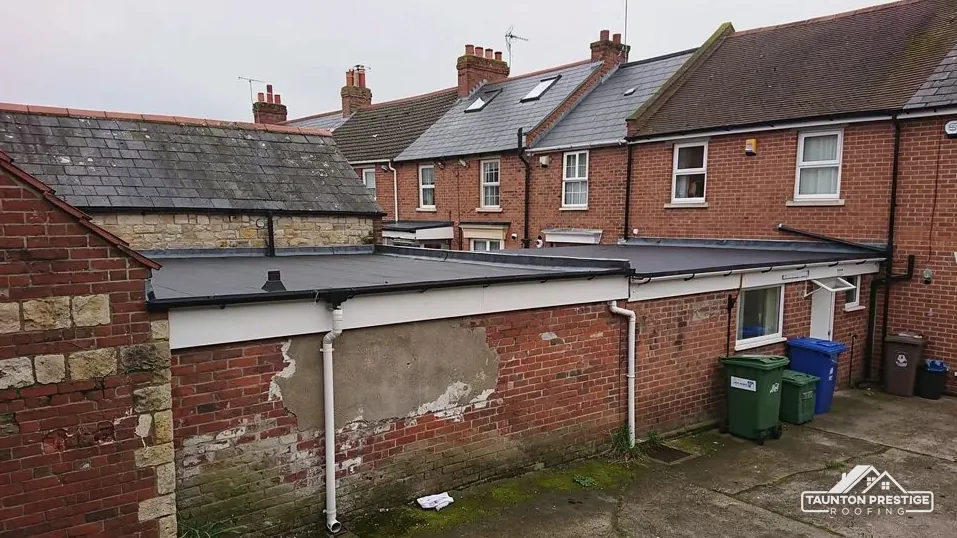 OvercladdingA new metal roof over old sheets
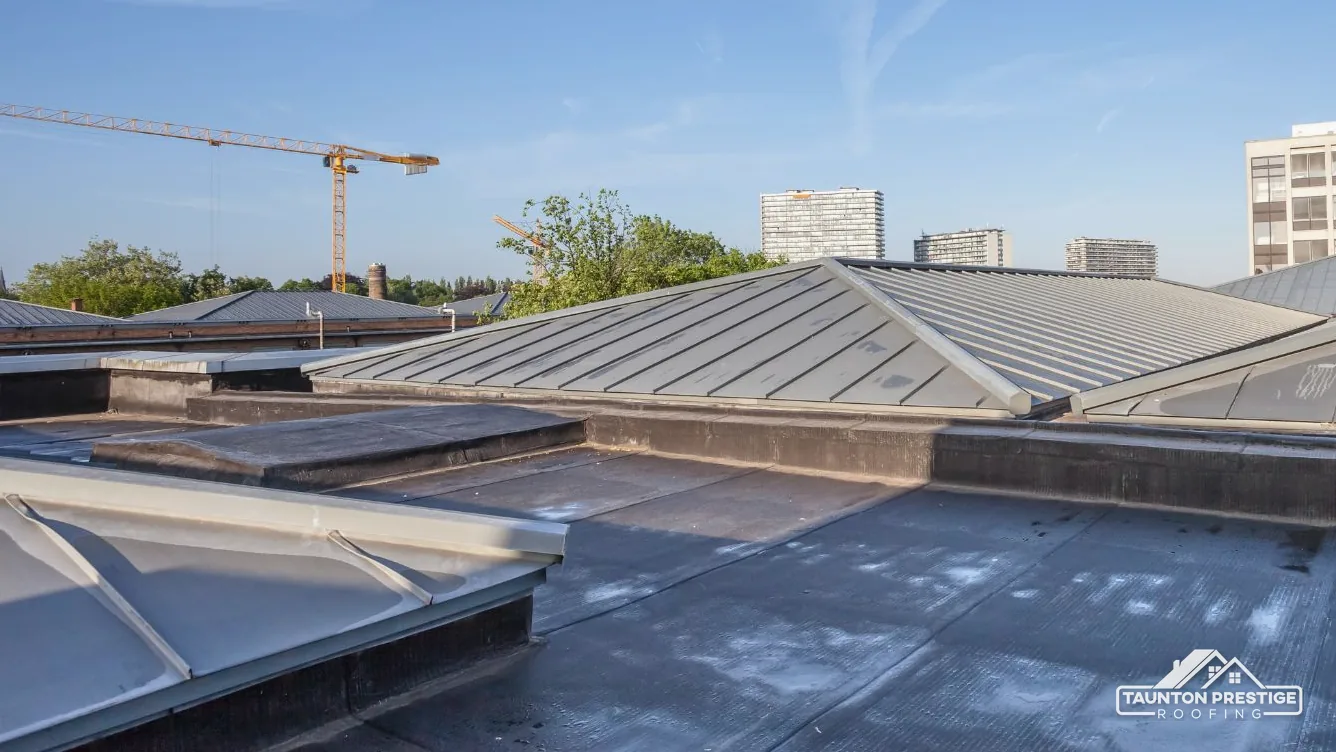 Flat roof systemsEPDM, single-ply, felt, GRP and coatings
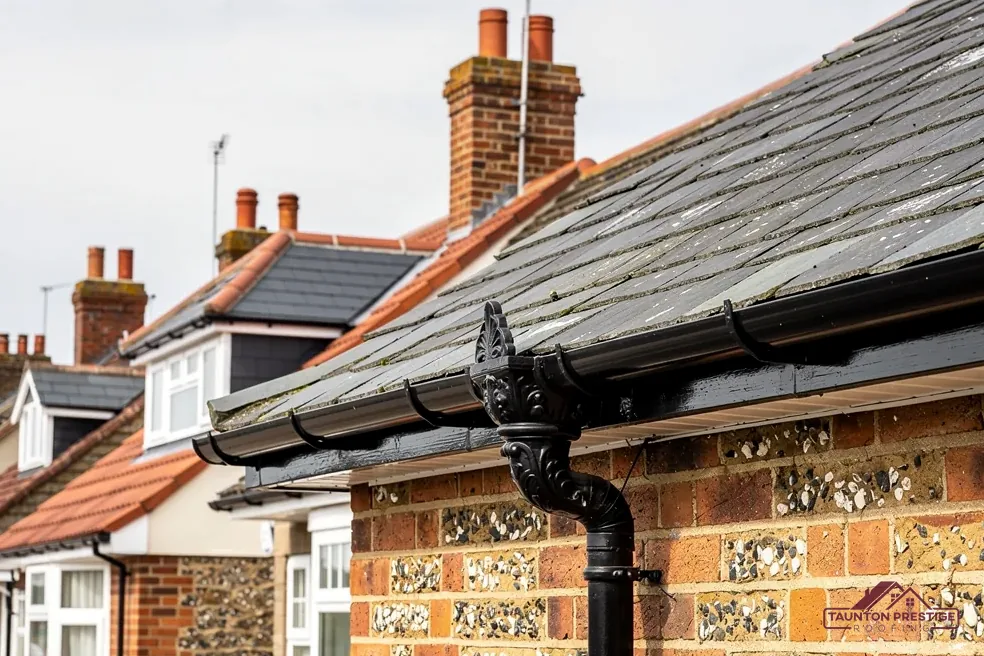 Box gutter liningLeaking valley gutters relined or renewed
 Rooflight replacementBrittle panels swapped in a matching profile
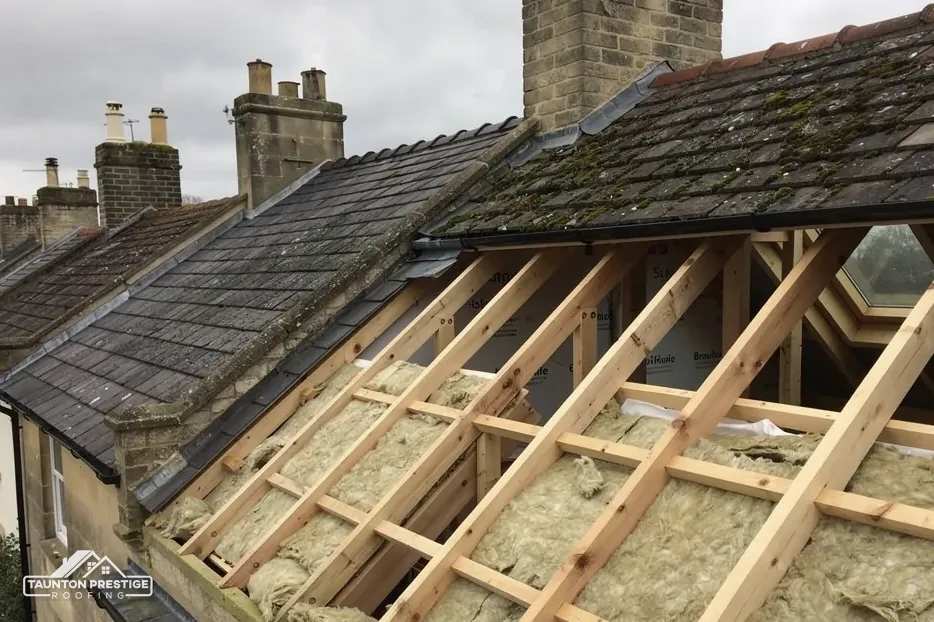 Condition surveysPhoto reports that plan the upkeep
Leaks at a handful of laps, fixings or rooflights on otherwise sound sheets.
Old sheets still whole but tired, or asbestos better left undisturbed underneath.
Sheets rusted through, purlins failing, or the building's use has changed since.
The commercial roof walk
How we read a commercial roof before we price it, from the covering itself to the paperwork, and what your own staff can safely check from the ground.
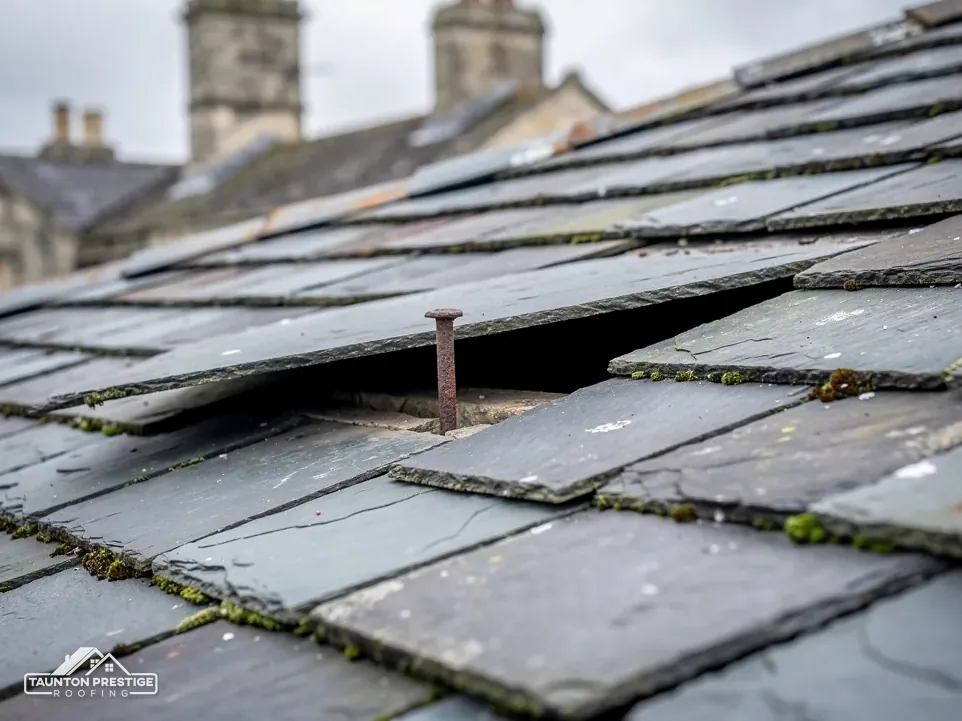
Commercial roofing in Taunton spans a wider spread of buildings than house roofing ever does: rows of industrial units, workshops and warehouses, shops with flats above, offices, schools, chapels, and the barns and sheds that farms around the town rely on. Before anyone talks about repair or replacement, we name what is actually on the roof, because each covering fails in its own way and needs its own fix. A careful commercial roofer starts there, and so should anyone setting a maintenance budget for a building.
Look for
Name every roof on the site before anyone puts a price on one of them.
Profiled metal sheets are long steel or aluminium panels pressed into ribs or waves and screwed down to purlins, the horizontal rails of steel or timber that span the frame. Many are coated steel with a painted or plastic face. Fibre-cement sheets can look alike from the yard but are thicker, grey and chalky, with a deeper wave, and older ones may contain asbestos. Big flat roofs over offices, shops and extensions carry a membrane instead: built-up felt laid in layers, EPDM (a synthetic rubber sheet), a single-ply plastic sheet, GRP (glass-reinforced plastic, a fibreglass mat set in resin) or a liquid coating. Older shops and converted chapels in the town centre often keep slate or clay tile, which we repair just as we would on a house.
Age tells us what might be hidden. HSE's advice is direct: if the building was built or refurbished before 2000, assume that there is asbestos in it. That changes how we survey, where we stand and what happens to any waste. Age hints at insulation too. A single-skin sheet roof with nothing under it drips condensation on cold mornings, and owners often take that for a leak. Insulated panels, two metal skins bonded to a foam core, behave quite differently, and their joints need different care.
We record each roof area separately, because one site can carry three coverings at once: sheets on the main shed, a membrane on the office block and tiles on the porch. A written description with photos of each, kept with your building records, makes every later job quicker to brief. If you hold drawings, an old survey or invoices for past roof repairs, send those as well; they save time on the first visit.
A profiled sheet roof is a plain idea: big sheets overlap their neighbours and are screwed down to the purlins underneath. Its weak points are the overlaps, the fixings and the cut edges. The side lap runs down the slope where one sheet rides over the next; the end lap is where an upper sheet laps over a lower one. Both rely on a sealant tape or mastic strip between the sheets, and both open up as the frame moves and the sealant hardens. Wind-driven rain then creeps uphill through the gap, which is why an industrial roof leak tends to show at the same spot after each storm. The same sheets often run down the walls as cladding, and their laps and flashings age in the same way.
Coated steel sheet is protected on both faces, but every sheet is cut to length, and that bare cut edge carries far less protection. Moisture lingers along the bottom edge of each sheet at the eaves and at end laps, rust starts there, and the coating peels back up the sheet. Left alone, it eats the steel away over the gutter line. Our guide to cut-edge corrosion on metal roofs covers how edges are cleaned back, primed and sealed.
Often, yes. Fixings with perished washers are swapped for new ones with sealing washers, failed laps are opened, cleaned and resealed, and a holed sheet is replaced in the same profile. Rooflights, the translucent panels set among the metal sheets, turn brittle and cloudy with age; a cracked one lets rain in and is a fall hazard as well, so it goes before anything else. Where rust has spread across whole sheets instead of along their edges, repairs stop being good value, and overcladding or a new roof is the better sum.
Farm buildings carry the same sheets, often with open sides, livestock below and gutters choked with straw and leaves. We plan the work around stock movements and harvest, and allow time if bats use the roof space. Moving machinery across a working yard needs planning too, so we agree times with whoever runs the farm from day to day.
What decides the price
Look for
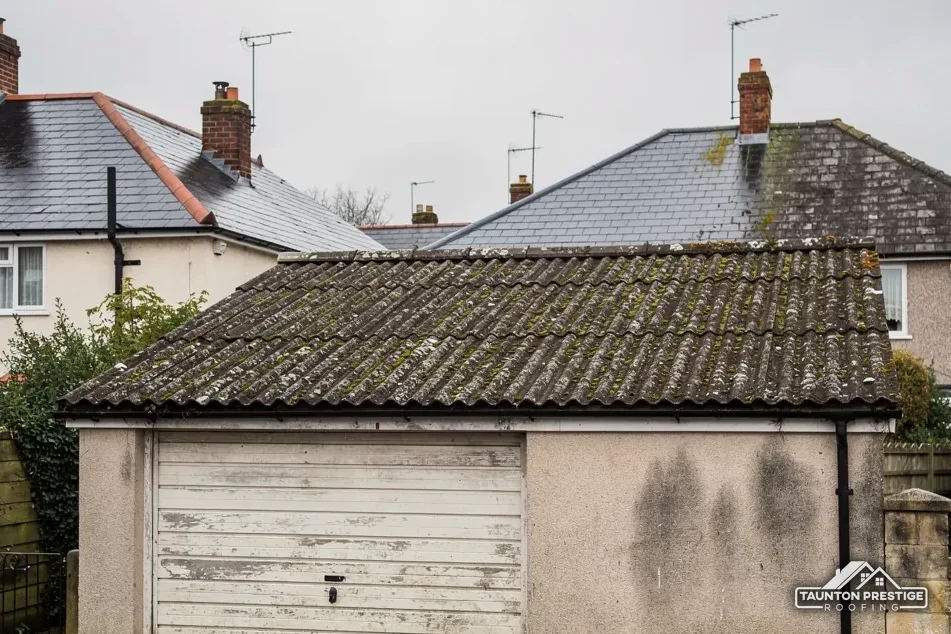
Corrugated cement sheets went onto a great many farm buildings, garages and industrial units, and on older buildings the cement may hold asbestos fibres. Nobody can tell by looking. A sample has to be tested, or an asbestos survey carried out, before any work on the sheets is planned. Until then we treat an old cement sheet as asbestos, and we price and plan the job that way.
No. HSE's guidance states that AC roofs are always fragile, whatever their age or how sound they look, so a foot placed between the purlins can go straight through. Work on these roofs is planned from below where possible, or from crawling boards and staging spread across the purlins, with edge protection or safety netting where the drop calls for it. Never send a member of staff up to clear a gutter or free a blocked outlet on one, however quick the job seems.
Rooflights set into cement sheet roofs carry the same risk, and under moss and grime the two can be hard to tell apart. Before work starts we mark the safe route and the no-go areas on a sketch of the roof, and everyone on site is shown it.
Treat an old cement sheet roof as fragile, and as asbestos, until a test proves otherwise.
There are three routes. Overcladding fixes a new metal sheet roof over the old sheets on brackets and spacers, usually with insulation in between, so the asbestos stays where it is, undisturbed, and the building's energy efficiency improves at the same time. Our answer on what roof overcladding involves explains the build-up. Encapsulation seals weathered sheets under a coating, which suits a roof that is sound but dusty and furred with lichen. Stripping takes the sheets off altogether, usually followed by a new roof.
Under HSE's rules, careful removal of asbestos cement without breaking it up is non-licensed work. Once sheets are substantially broken up, for example by dropping the roof, it becomes notifiable non-licensed work, with health records kept for 40 years. Removed sheets are double-wrapped and labelled, then leave site on a hazardous waste consignment note with a registered carrier, never loose in a skip. Smaller garage and outbuilding roofs sit with our garage and asbestos roof service.
What decides the price
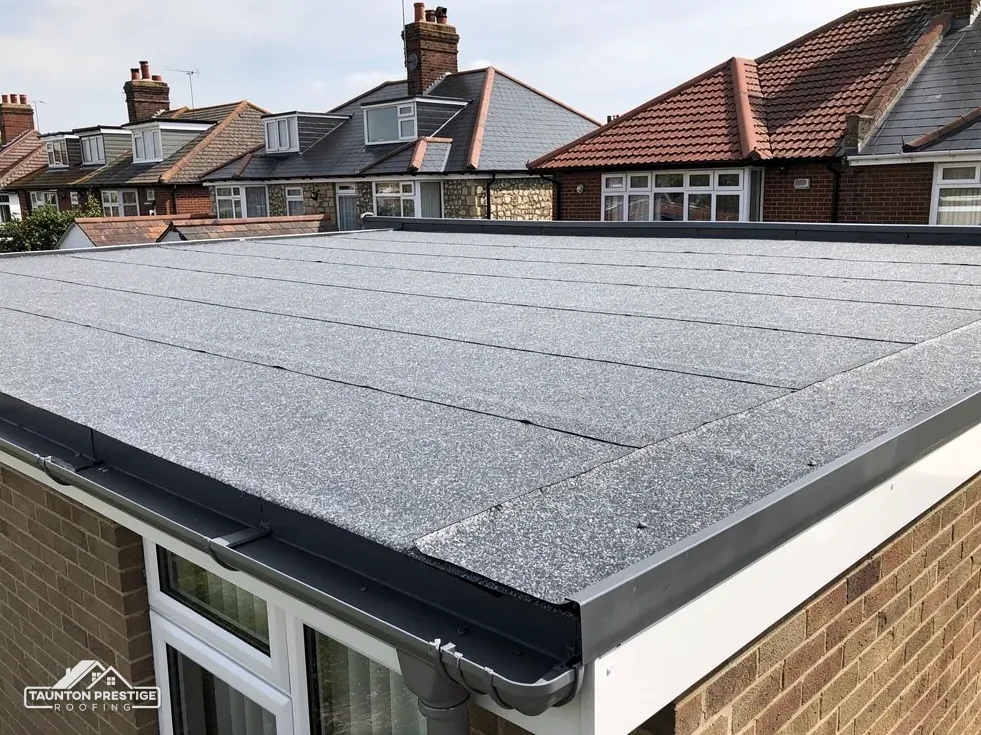
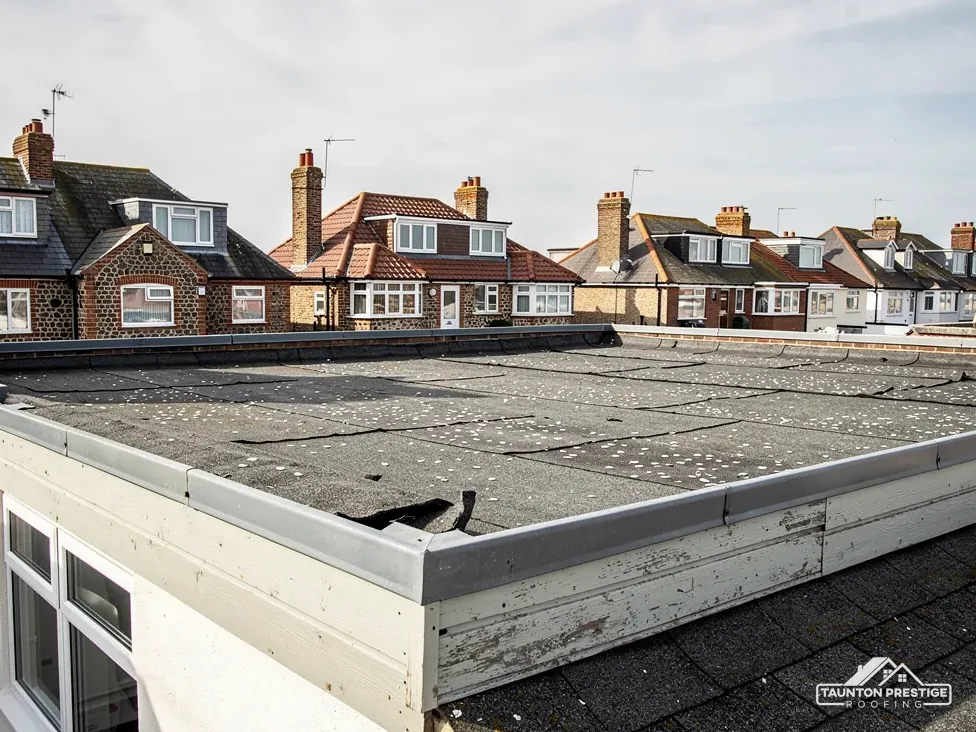
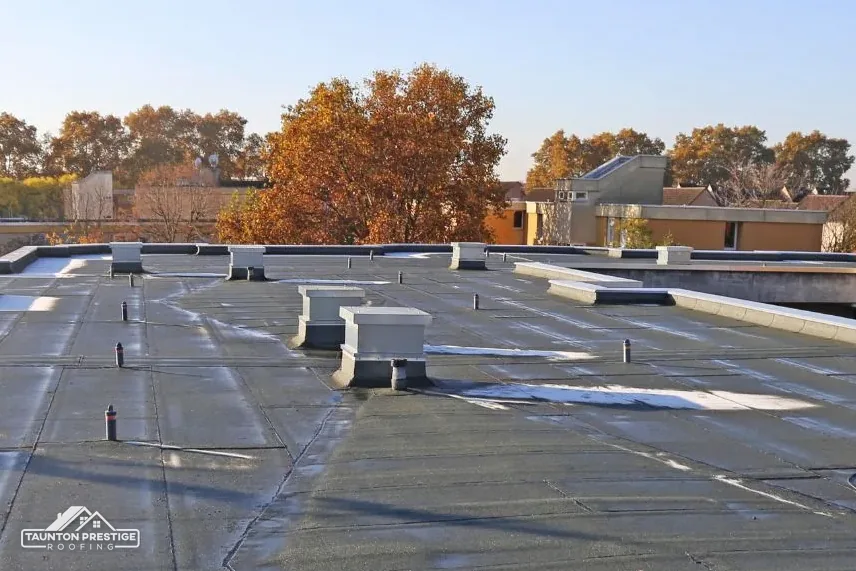
A big flat roof over offices, a shop or a school block only works while water leaves it. BS 6229:2025, the current code of practice for flat roofs with flexible waterproof coverings, applies to roofs pitched at no more than 10 degrees and keeps a minimum finished fall of 1:80; the designer aims for 1:40 so that the roof still drains once the deck has settled and deflected. Where puddles sit for days after rain, the fall has been lost somewhere, and every membrane ages faster under standing water and the grit it leaves behind.
What decides the price
Look for
Built-up felt goes down in two or three bitumen layers, torched or bonded, and takes foot traffic around roof plant well. EPDM is a synthetic rubber laid in wide sheets with very few joints. Single-ply means thin plastic membranes such as PVC and TPO (thermoplastic polyolefin), welded at the seams with hot air; our answer on single-ply roofing membranes sets them side by side. GRP gives a hard, jointless surface that suits smaller roofs and walkways. A liquid-applied coating is brushed or rolled over a sound roof to renew its surface without stripping it.
Published figures are ranges, never promises. Less gives torch-on felt 10 to 20 years and GRP 25 to 40 years (Less, Oct 2026). For EPDM the guides disagree: GreenSpec gives 20 to 30 years, while Less gives 30 to 50 years. Workmanship at the upstands, outlets and edges decides a great deal of that, because those details are where we look first when a flat roof leak is reported.
That depends on how the roof is used, what plant and foot traffic it carries, how it is reached, and whether insulation is going in at the same time. A membrane laid over the old one can save stripping, but only if the deck below is dry and sound, so we core or open a small area first. Insulation often goes in when a flat roof is renewed, which lifts the finished surface, so upstands, door thresholds and rooflight kerbs are measured for height before a system is chosen. Ask your building control body what the new roof has to meet. Roof plant matters as well: extract fans and air-handling units pierce the membrane, and the seals at their bases dry out and crack. Domestic flat roofs over garages and extensions are covered on our flat roofing page.
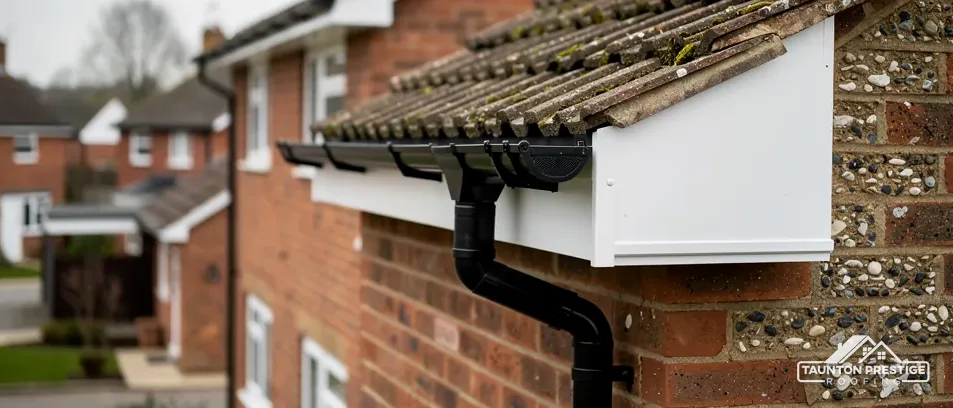
On a building with two or more pitched bays side by side, rain from both slopes runs into a box gutter: a flat-bottomed channel sitting between them, often right above the shop floor, the office or the warehouse racking. When it blocks or its lining splits, the water does not drop harmlessly off an eaves. It spills inside. A ceiling stain on a twin-bay building can therefore point to the gutter long before it points to the roof sheets, and the fix is very different.
What decides the price
Leaves, moss, grit and the odd pigeon nest gather at the outlet, the opening that takes water into the downpipe. A partial block holds water in the gutter until it rises above the lining and runs back under the sheets. A gutter that has sagged loses its fall, so water sits at the low point and works at the joints. Older box gutters may be lined in lead, felt or bare steel that has rusted at every seam. An overflow pipe or weir at each end gives water a visible way out, so you see a warning outside instead of a wet ceiling within.
A wet ceiling below a box gutter points at the outlet before it points at the sheets.
A single split can be patched. Where the joints have failed along the run, relining with a membrane or a GRP lining builds a new watertight channel inside the old one without cutting it out. On a long run we work a section at a time, so the gutter keeps draining while the rest is relined. Our answer on box gutter leaks and lining weighs the options. Lead gutters call for heavier sheet than a house flashing: Royston Lead lists codes 5 to 8 for parapet and box gutters, and lead can last for over 80 years when it is laid with the right joints. We also check that outlets and downpipes are clear and large enough for the roof area they drain, and that the external gutters, fascias and roof edges are sound.
Clearing box gutters each autumn after leaf fall, and again in spring, is a small maintenance job that protects stock, stores and ceilings below.
A commercial roof seldom fails all at once. It loses a fixing here and a lap seal there, the gutters silt up, and one wet winter turns a drip into spoiled stock, a closed aisle or a collapsed ceiling tile. A regular roof inspection is how a landlord, a facilities manager or a business owner stays ahead of that, and it is some of the best-value roofing work you can pay for.
Look for
Set an interval that suits the roof and what sits beneath it: a look before winter, another in spring once the leaves are out of the gutters, and an extra visit after any severe gale. Each inspection should leave you with a written condition report and photos of every roof area, listing the faults found, what is urgent and what can wait for next year's budget. We take photos from the same positions each time, so changes show up from one visit to the next.
Gutter and outlet clearance, resealing laps and replacing tired fixings, treating cut edges before the rust spreads, checking rooflights, clearing moss and debris from membranes, re-dressing loose flashings, and mending small splits while they are still small. A maintenance plan turns emergency spending into a figure you can budget for, and gives you a record to show a buyer, a tenant or an insurer.
Keep people well clear of anything loose, hanging or lying on the ground below the roof, then call us. The first visit stops the water with sheeting or a temporary patch over the opening, and we return for the lasting fix when the wind has dropped and materials are in. Tell your insurer straight away, photograph the damage before anything is moved, and keep every receipt. We give you photos and a written account of what we found and what we did. Where wind or rain is still getting in, sheeting the area below protects stock and equipment while the repair is booked.
Keep your own log too. The date, the weather and the spot where water appeared, with a phone photo, lets us trace a leak to the right lap or outlet far faster than a description given weeks later.
Commercial roof work tends to happen above a building that cannot simply close. We agree the order of work with you before anything starts: which bays open when, where the scaffold or tower stands, how customers and deliveries are kept clear, and which noisy jobs are booked outside opening hours. Areas below are sheeted or emptied, and we open only as much roof as the crew can close up again by the end of each working day. Our answer on replacing a roof while you trade covers phasing in more detail.
What decides the price
A business is not a domestic client under CDM 2015, so the client duties stay with you. Where more than one contractor will work on the project, the client must appoint a principal designer and a principal contractor in writing (regulation 5). Every project needs a construction phase plan, drawn up by the principal contractor or, with a single contractor, by that contractor. Our answer on the principal contractor on a roof project explains who does what.
Under the Town and Country Planning Act 1990, s55, works that do not materially affect the external appearance of the building are not development. A new roof that changes the look, height or covering may be, so check with Somerset Council's planning team, or Exmoor National Park Authority inside the Park. For Building Regulations, the Planning Portal says no application is normally needed while less than 25 per cent of the building envelope and less than 50 per cent of the roof is affected, and approval is needed where a new covering adds 15 per cent or more to the weight. Somerset Building Control is on 0300 303 7790.
Roof work is charged at the standard 20% rate, but between businesses registered for VAT and reporting within the Construction Industry Scheme, the domestic reverse charge can apply instead; your accountant confirms which fits your contract.
To start, send us the site address, a rough sketch of the roof areas and your leak log, and we will book a survey around your opening hours.
Walked the roof?
Keep your staff on the ground, write down what they see and when, and leave every roof surface to us.
| Job | Typical range |
|---|---|
| Roof survey (average) | around £300 |
| Drone roof survey | £200 to £350 |
| Asbestos survey | around £325 |
| Asbestos roof removal (average job) | around £2,750 |
| EPDM rubber roofing, domestic scale | around £60 per m² |
Typical UK ranges from MyJobQuote for smaller jobs, not what we charge. Your written price follows our survey of the building; when comparing, ask whether VAT and scaffolding sit inside each figure you are given.
MyJobQuote cost guides, Sep and Oct 2026
Shorter reads for owners and managers: cut-edge corrosion, overcladding, single-ply membranes, box gutters, asbestos-cement sheets, VAT, CDM duties and re-roofing while you keep trading.
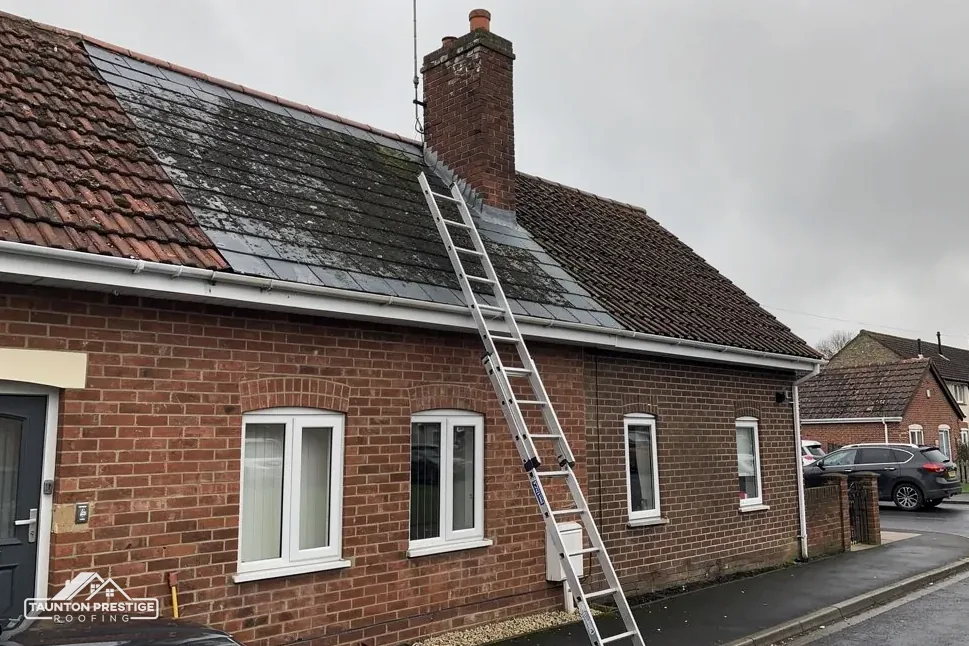 Cut-Edge Corrosion on Metal Roofs: Signs and TreatmentOn a coated steel sheet roof, rust usually starts where the sheet was cut. Here is why edges go first, how to spot it early, how treatment works and...
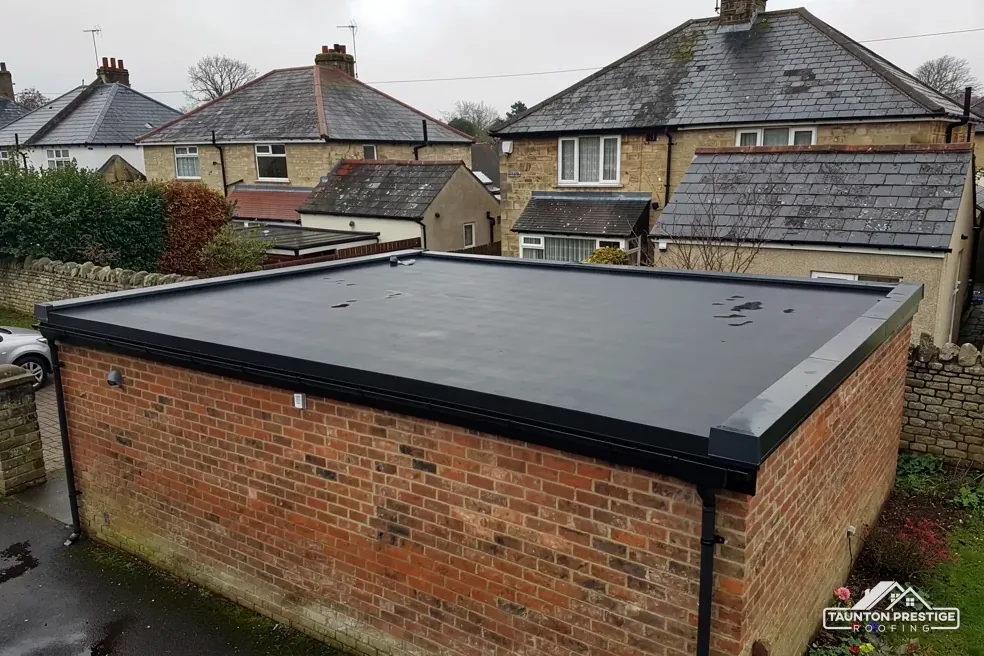 Commercial Flat Roof Systems: Built-Up, EPDM, TPO, PVCFour names get quoted for a flat commercial roof, with liquid coatings as a fifth option. Here is what each is, what published lifespans say, and why...
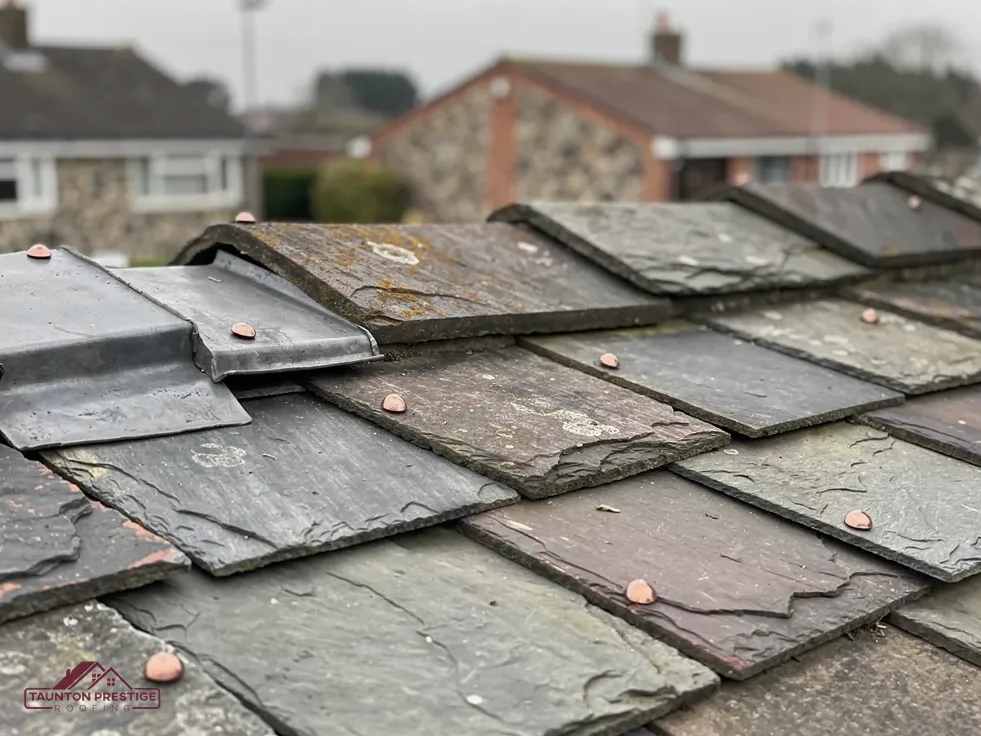 Emergency Roof Repairs for Commercial PremisesWhen water comes through a business roof, the first aim is keeping people safe and stock dry. This is what a make-safe involves, and what to settle...
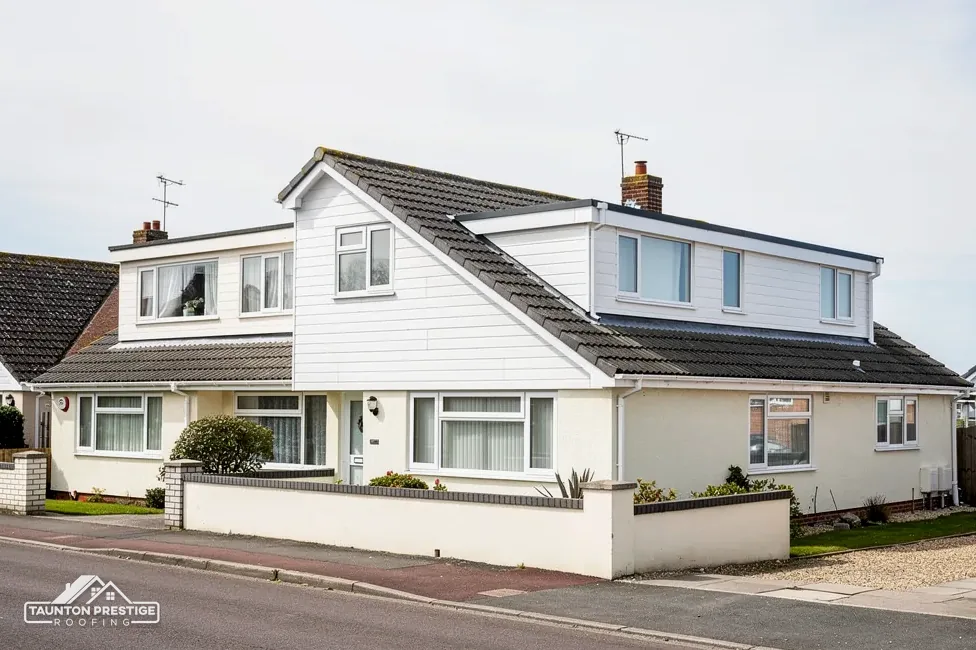 Flat Roofs on Commercial Buildings: Pros and ConsA flat roof suits some business buildings very well and others badly. Here are the real advantages and drawbacks for units, offices and farm...
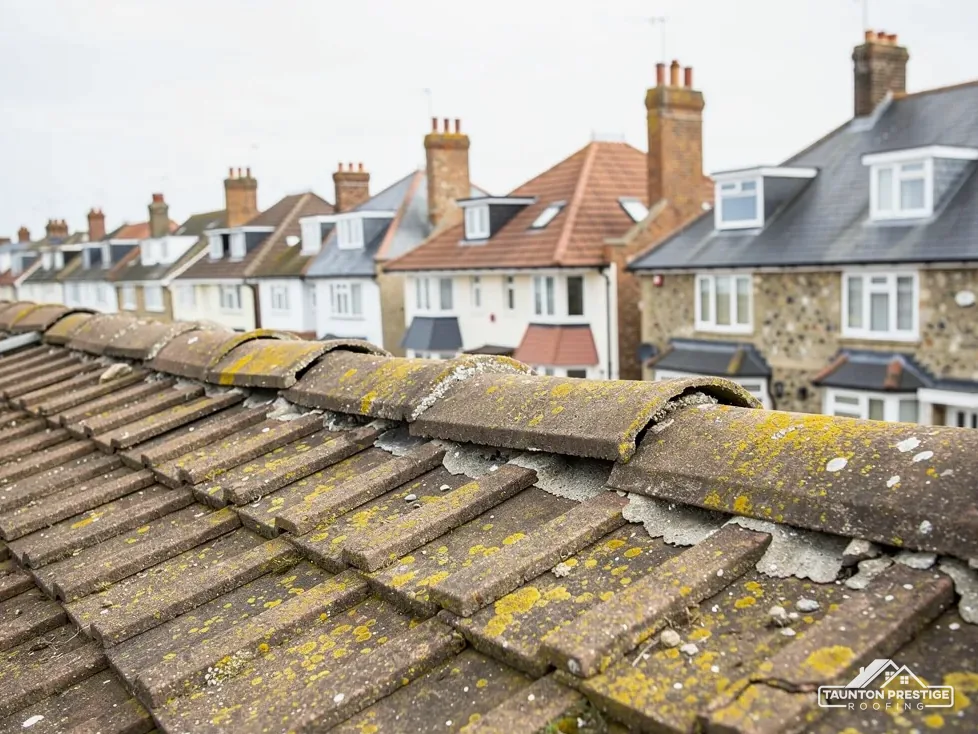 Making a Commercial Roof Last: An Owner's PlanA commercial roof rarely fails on one bad day. It wears out through small jobs left undone. This is an owner's plan for records, inspections...
 Budgeting for a Commercial Roof ReplacementA commercial roof budget comes from what the survey finds, not a rate per square metre. Here are the cost drivers, the extras owners forget, and how...
Yes. Alongside commercial roofing in Taunton itself, we work on units, shops, offices and farm buildings in Wellington, Bridgwater, the Somerset Levels villages, the Quantock and Blackdown Hills, and over the Devon border around Tiverton and Cullompton. In Devon, scaffold licences come from Devon County Council, on its own fees and rules.
Often, if the old sheets and the frame beneath them are sound enough to carry a new roof. Overcladding leaves the sheets in place and undisturbed, with new metal sheets and insulation fixed above on brackets. A structural check comes first, and the asbestos stays on the building's register so anyone working there later knows it is present.
It depends on use. Built-up felt copes with foot traffic around plant, EPDM suits large plain areas with few joints, single-ply welds neatly around awkward details, GRP suits smaller roofs and walkways, and a liquid coating can extend the life of a roof that is still sound. We recommend one after the survey and explain why in writing.
Not always. A repair costs less on the day, but patching sheets that are rusting through, or a membrane that has failed right across the roof, means paying again every winter. We tell you plainly which route makes sense and why, so you can weigh it against how long you plan to keep the building.
Yes. Stripping and deliveries can be booked early, late or at weekends where the site allows, and the roof is phased so that one area is open at a time. Rooms and racking below are sheeted or cleared, and the open section is made watertight every evening before we leave the site.
That depends on the covering and how well it is looked after, and published figures are ranges rather than promises. Less gives GRP 25 to 40 years and torch-on felt 10 to 20 years. For EPDM, GreenSpec says 20 to 30 years and Less 30 to 50. Fixings, laps and gutters usually need attention long before the sheets do.
Send your site address and where it leaks, and we will book a survey around your hours.