EPDM rubber
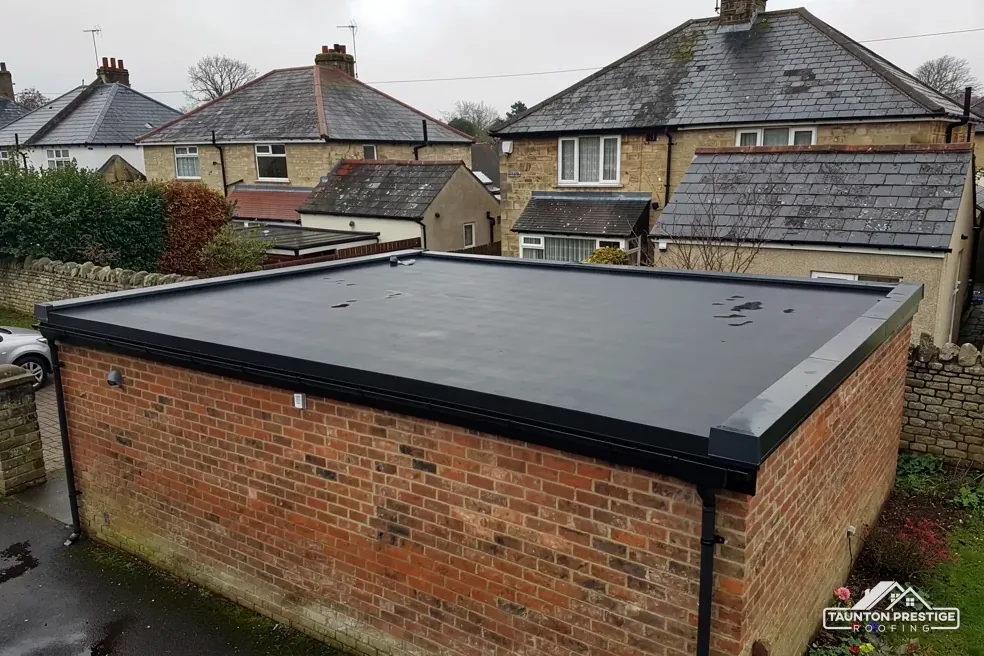
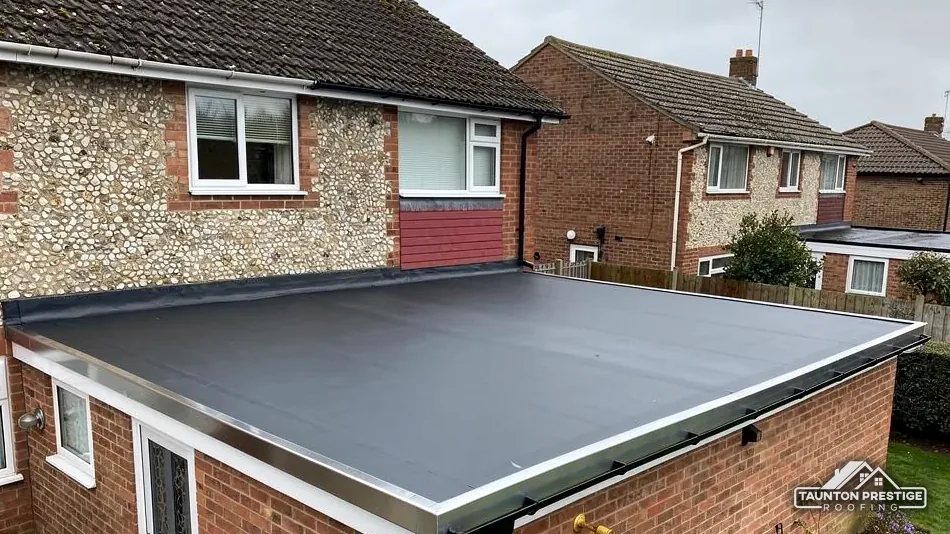
A synthetic rubber sheet, bonded to the deck with very few joins.
Rubber, fibreglass and felt roofs, read from the deck up.
We get up on the flat roof, find where the water is really getting in, and show you photos before we suggest a patch or a new covering.
A synthetic rubber sheet, bonded to the deck with very few joins.
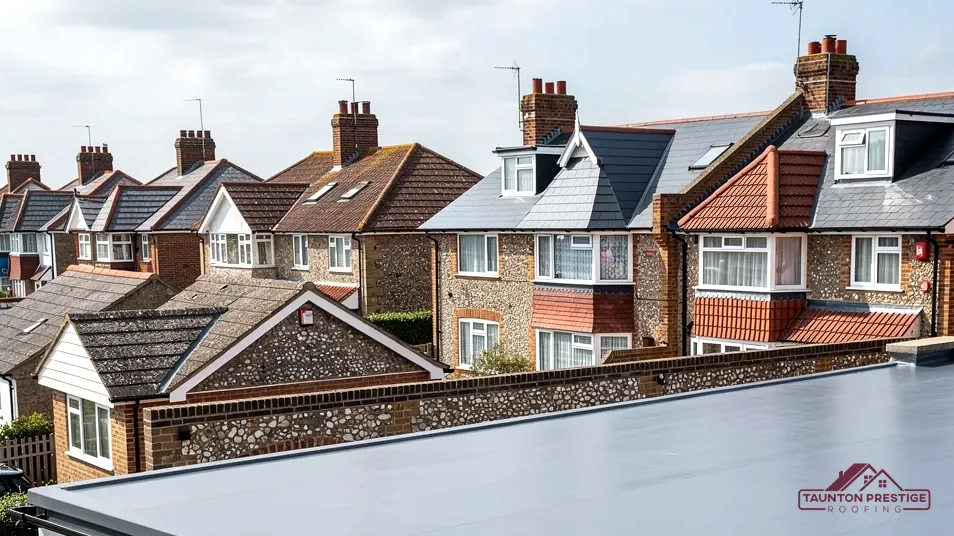
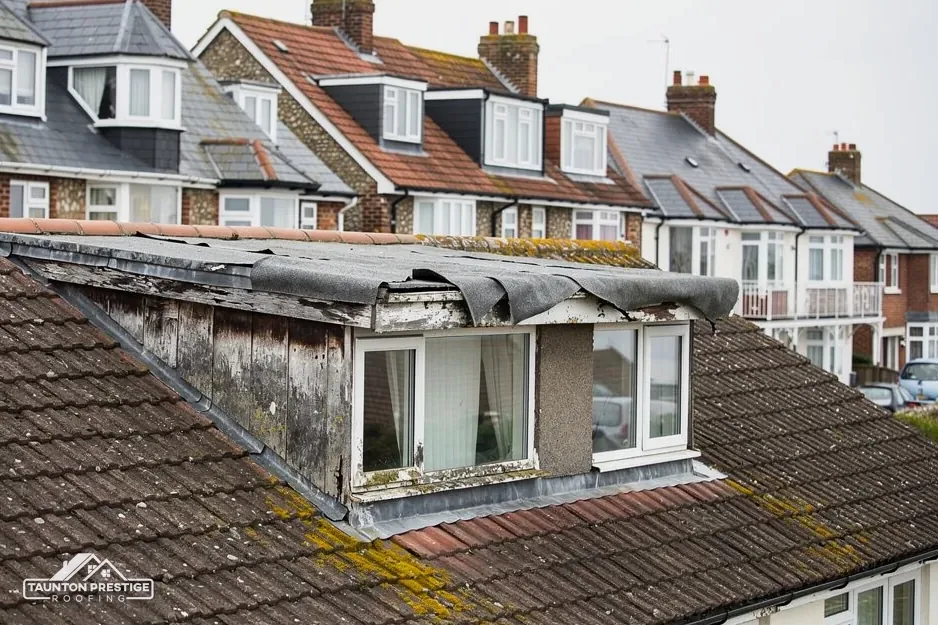
Resin and glass matting laid wet, cured hard, then topcoated.
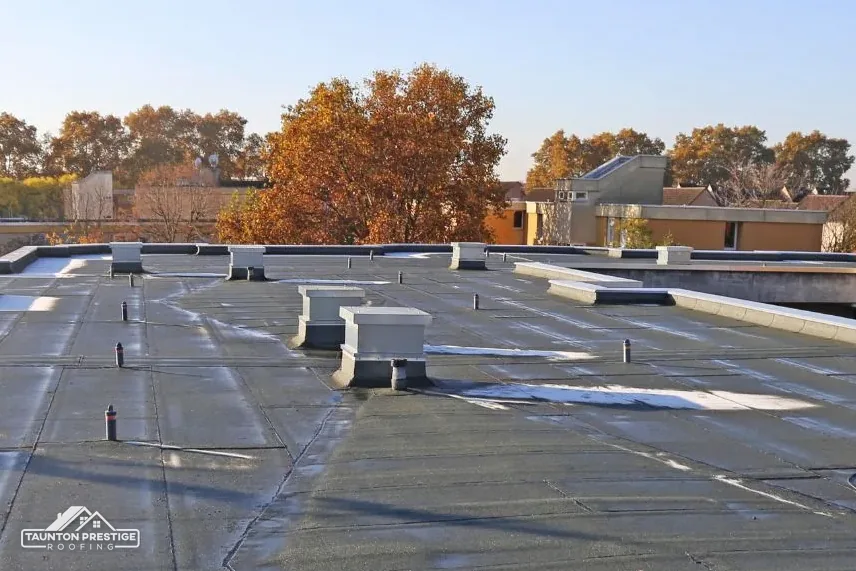
Bitumen layers fused by gas torch under a mineral-chipped cap sheet.
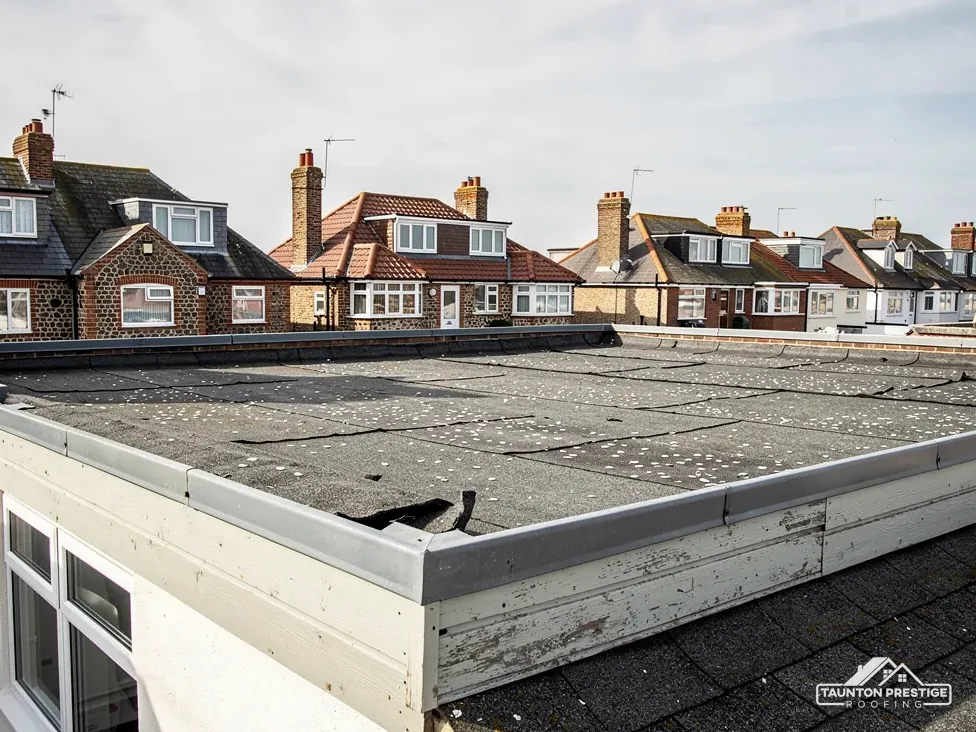 Leak repairsSplits, blisters and lifted laps sealed
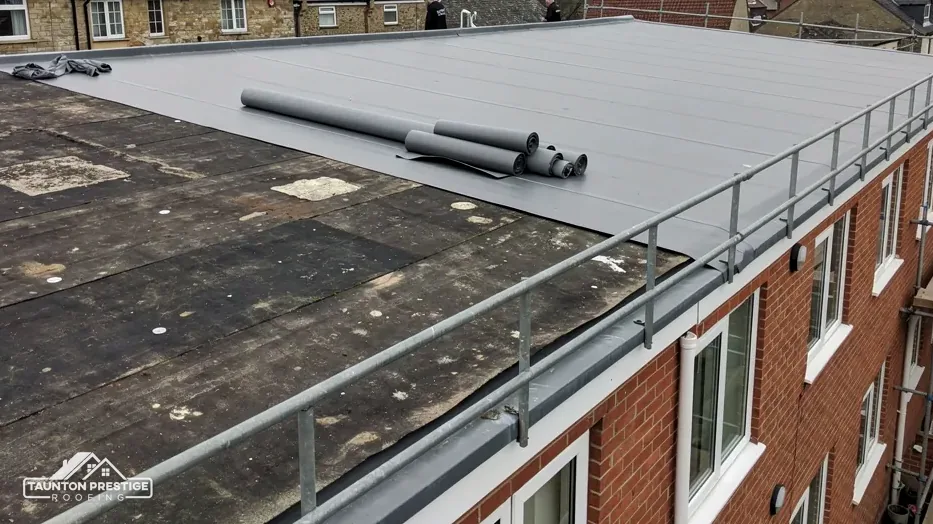 Full replacementOld covering and tired deck stripped
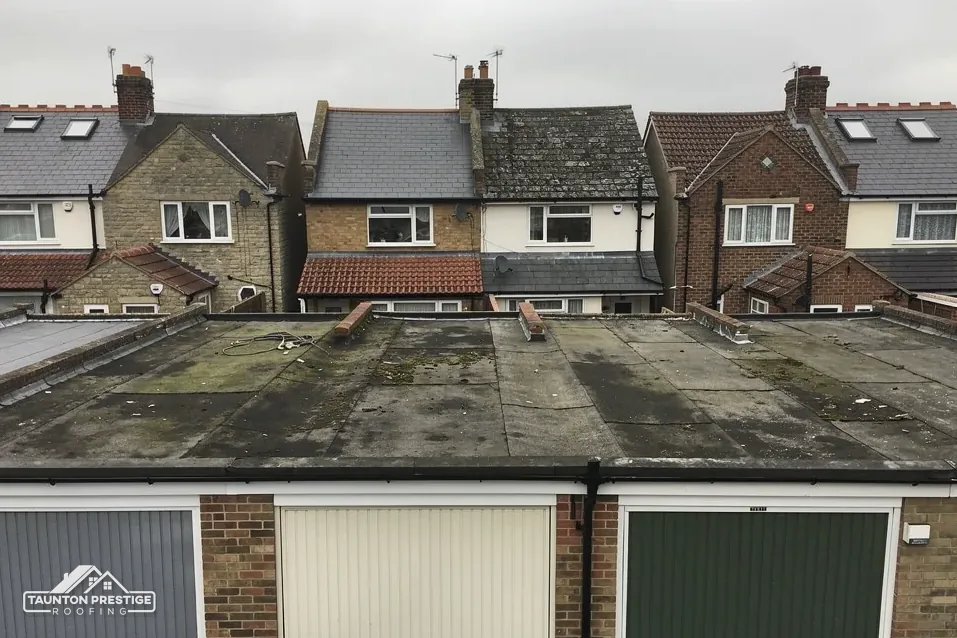 Warm roof upgradesInsulation laid above a new deck
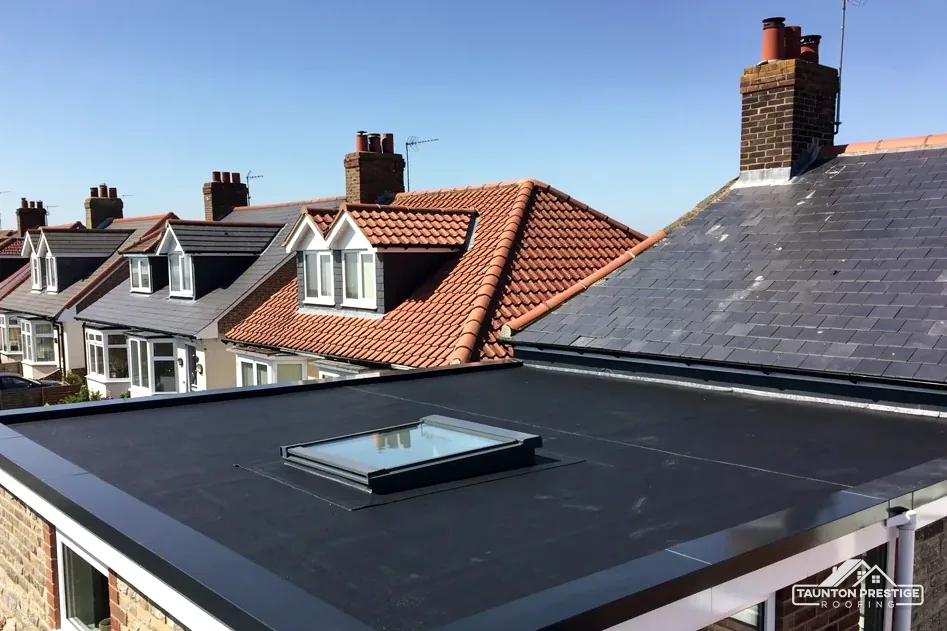 Edges and outletsTrims, upstands and outlets renewed
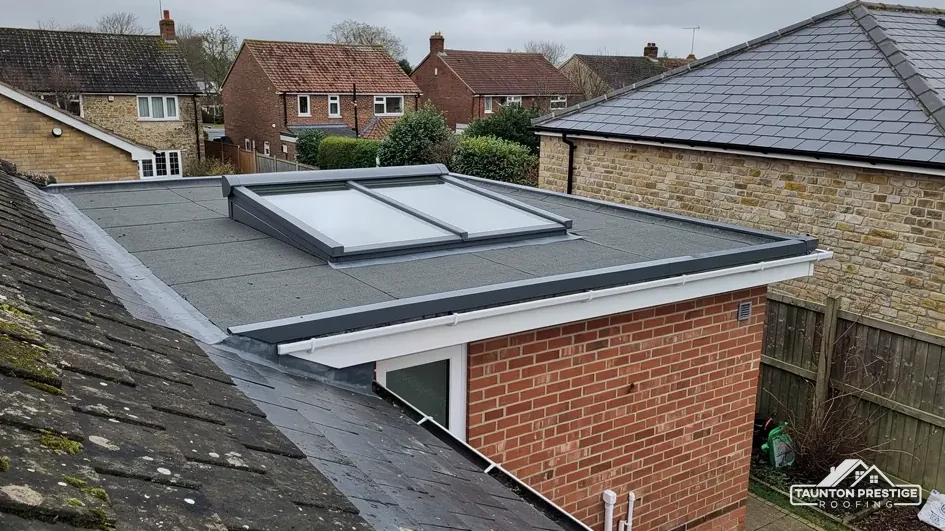 Dormer and extension roofsSmall roofs where access is awkward
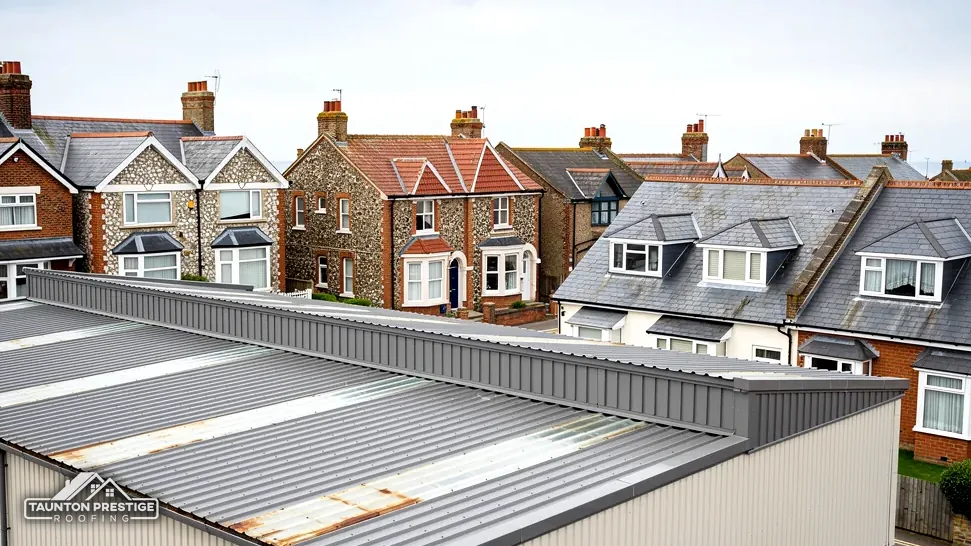
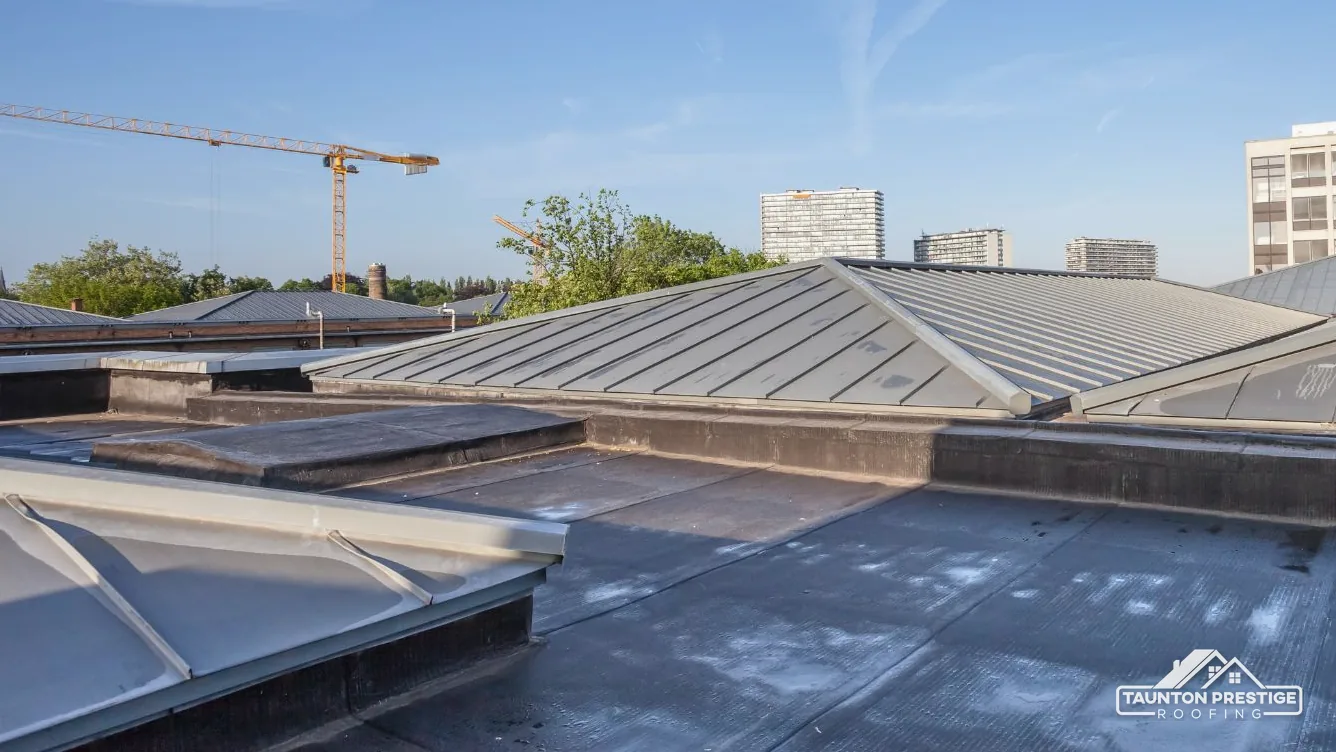 Small commercial roofsShops, offices and outbuildings near Taunton
One split, blister or failed lap on a roof that is otherwise dry.
The covering is worn out but the deck below is firm, level and dry.
Soft boards, wet insulation or ponding that the old falls never cleared.
The flat roof walk
Flat roofs fail at the edges and in the low spots long before the open middle wears out. This is the order we read one in, and the parts you can see for yourself.
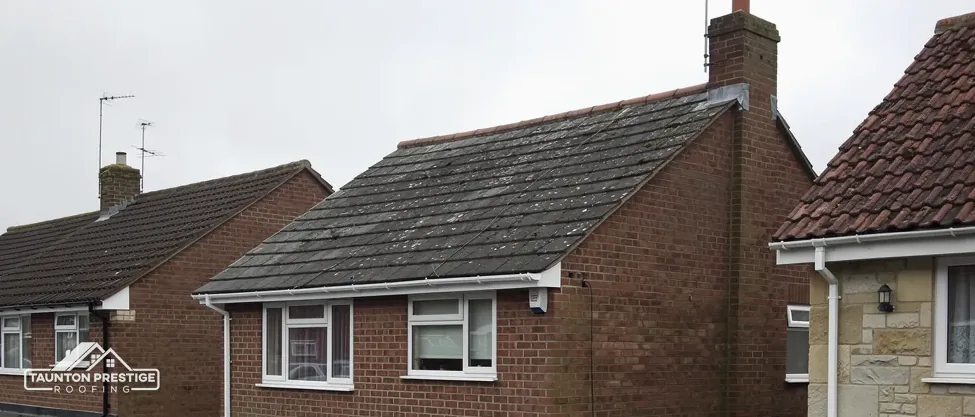
A flat roof is never truly flat. It is laid at a very low slope, so rain creeps towards a gutter or an outlet instead of running straight off as it does from a slate or tiled slope. BS 6229:2025 is today's code of practice covering flat roofs finished in flexible waterproof coverings, and it takes in any roof pitched at 10 degrees or less. Flat roofing in Taunton and across Somerset sits over rear kitchens, garages, porches, bay windows and dormers, and on the flat-topped parts of shops and small commercial buildings. Whatever it covers, we start by naming the waterproof layer.
Look for
A patch in the wrong material lets go in the first wet spell it meets.
A felt roof is black or grey, often with a scatter of mineral chippings on top, and you can see the overlapping strips where one roll meets the next. EPDM, short for ethylene propylene diene monomer, is a synthetic rubber sheet: dull black, slightly soft underfoot, with very few joins because it can go on in one piece. GRP, glass-reinforced plastic, is the material sold as fibreglass: a hard, smooth surface that looks painted, usually grey, turning up at the edges into moulded trims. Some older houses carry lead or zinc on a bay or a small porch, laid in sheets with raised rolls where they join.
Each material is joined and mended in its own way. Felt is repaired by cutting out the failed area and bonding new layers over it with heat. EPDM is cleaned, primed and patched with a compatible rubber. GRP is ground back and laminated again with fresh resin and glass matting, then topcoated to match. Use the wrong product and it simply will not stick, so the repair lets go in the first wet spell. Sealant squeezed from a tube and painted over a crack does much the same.
For the right space, yes. A flat roof keeps an extension low, which helps under a first-floor window or close to a neighbour, and it takes less timber than a pitched roof over the same floor. The price of that is water sitting on it for longer, so the falls, edges and outlets have to be right. Our comparison of flat roof materials sets the systems side by side.
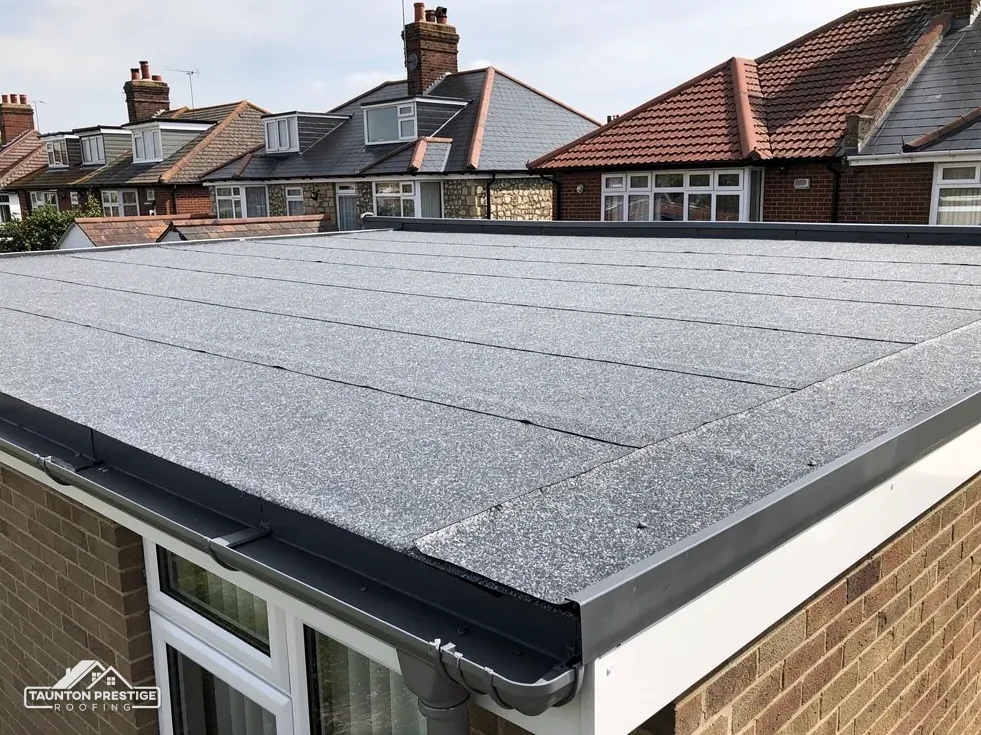
Flat roof repairs usually begin with a damp patch on a kitchen or bedroom ceiling. Water that gets through a flat roof can run a long way along the joists before it drips, so the stain is a clue, never a map. We start on top, at the edges and in the low spots, and work inwards until we find where the water is actually going in. Then the pictures go in front of you, and you judge the fault with your own eyes before any membrane is cut.
Sound or needs work
What decides the price
On felt, the usual culprits are blisters, splits and lifted laps. A blister forms when moisture or air trapped under the felt expands in the sun and pushes up a bubble; once that bubble cracks, rain gets underneath. Felt also shrinks and turns brittle with age, splitting along old joins and at the turn-up against a wall. EPDM seldom fails in the middle of the sheet. When it leaks, look at the corners, seams, pipe collars and the places where the rubber is glued to its edge trims. GRP tends to crack where the boards beneath it move: along board joints and at the angle where the roof meets an upstand, the turned-up section that runs against a wall. On any type, a blocked outlet can push water back over an edge that was never meant to sit under it.
A single split or blister on a roof that is otherwise sound and dry is worth repairing in the same material. If the deck under it is soft, the insulation is wet, or the covering is splitting in several places at once, a patch only moves the next leak along. Our answer on why felt roofs blister explains which bubbles matter and which can be left.
If water is coming through, our priority is stopping it. That might be a temporary sheet, a bonded patch, or clearing an outlet that has backed up, so the room below stops getting wet while the proper repair is planned. If you can do it safely from a window, take photos of the roof and the ceiling, and note the day the drip first showed and whether it was raining, blowing or both.
Ponding is water that stays on a flat roof long after the rain has stopped. Puddles the morning after a downpour are a warning; standing water that is still there when the next shower arrives is a fault. It adds weight, collects silt and moss, and works at every lap and joint it sits over. In cold weather it can freeze and thaw again and again, opening up any weakness in the covering. A wet winter gives a badly drained roof plenty of chances to fail.
The fall is the slope built into a flat roof to move water off it. BS 6229:2025 keeps a minimum finished fall of 1:80 for general roof areas and internal gutters. That is the least the roof should end up with once the timbers have settled and the boards have deflected a little, which is why IKO's guidance is to design a roof for a fall of 1:40. A roof designed to the bare 1:80 can easily finish flatter than that, and then the water sits. Some older roofs were laid with very little fall at all, or have sagged between their joists, which shows as a row of shallow dishes. Our answer on the fall a flat roof needs works through the numbers.
Clear the outlet before you blame the covering, because a blocked outlet floods a sound roof.
Sometimes the answer is at the outlet. A gutter outlet or rainwater pipe choked with leaves, moss or a lost ball holds water back across the whole roof, and clearing it ends the problem in an afternoon. Where the deck has dipped in one place, a small hollow can be built up as part of a repair. A roof that falls the wrong way, though, needs its falls rebuilt. That is done with firrings, tapered timber strips fixed along the joists, or with tapered insulation boards that carry the slope within the insulation itself. Either way the old covering has to come off, so it belongs with a replacement rather than a repair.
Every flat roof needs a planned exit: a gutter along the low edge, an outlet through a parapet wall, or a hopper head feeding a downpipe. If yours drains onto a tiled or slate roof below, or into a gutter that already overflows, the fault can show up somewhere else entirely.
Look for
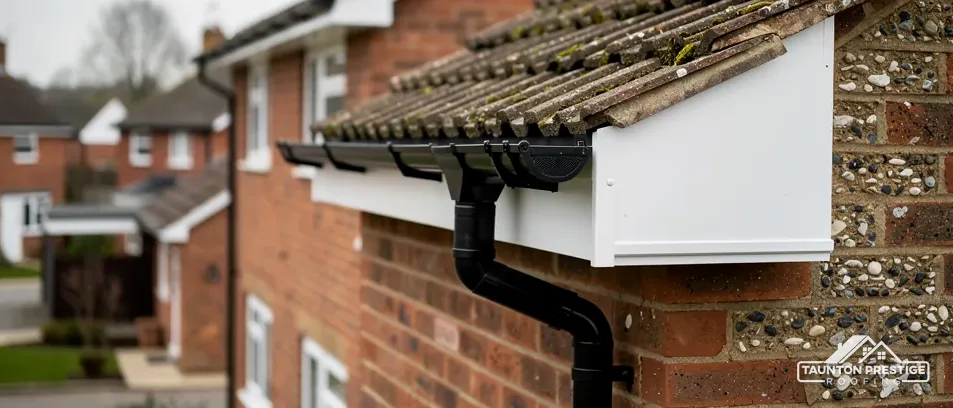
A flat roof is only as watertight as its edges. Out in the open middle the covering lies flat and has an easy life; at the perimeter it has to turn corners, meet walls, hang over a gutter and stay stuck down in a gale. That is where we look hardest, and where a flat roof leak is often hiding.
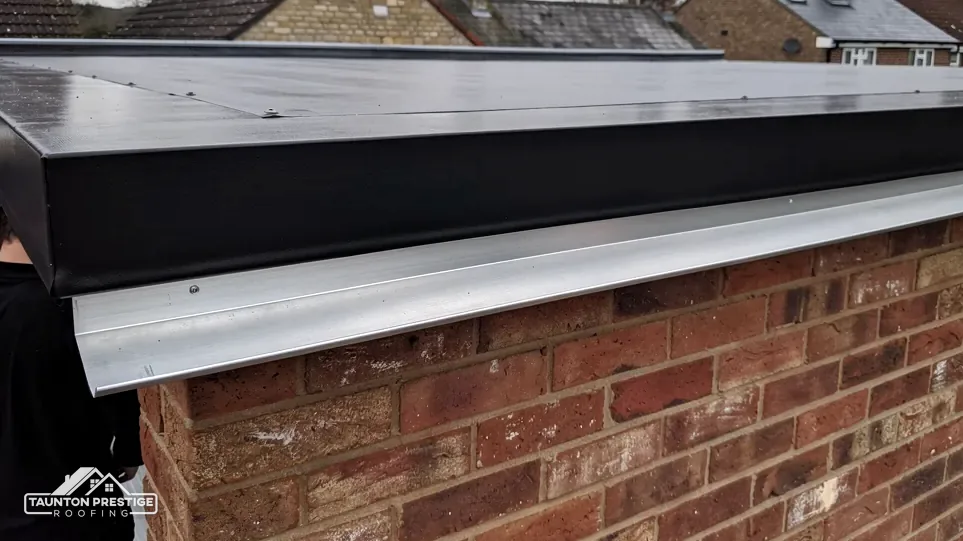
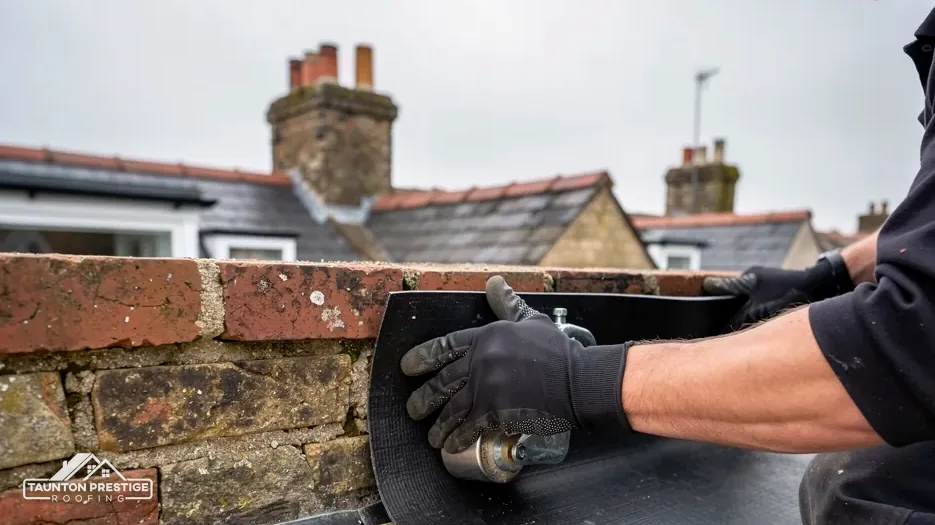
The edge trim is the strip along an open edge that holds the covering down and throws water clear into the gutter. On a GRP roof it is usually a moulded drip trim, on EPDM a metal or plastic edge, and on felt a felt-faced drip. An upstand is where the covering turns up a wall or the side of a dormer. Above it sits the flashing, a band of lead, or sometimes another metal, tucked into a mortar joint, which laps over the top so rain cannot run down behind. When those pieces part company, water gets into the wall, sometimes well away from the roof itself, and it may show first as damp on an inside wall rather than a stain on the ceiling.
The gutter is the roof's way out. If it sags, leaks at a joint or tips back towards the house, the water that left the roof cleanly pours down the wall or back under the edge trim. The fascia, the timber or uPVC board running along the roof edge, carries the gutter; the soffit underneath it closes off the overhang. A rotten fascia lets the gutter brackets pull out, and a damp soffit can be the first visible sign that an edge has failed. We check both on every flat roof and can renew them on the same visit; our gutters, soffits and fascias service covers roofline work on its own.
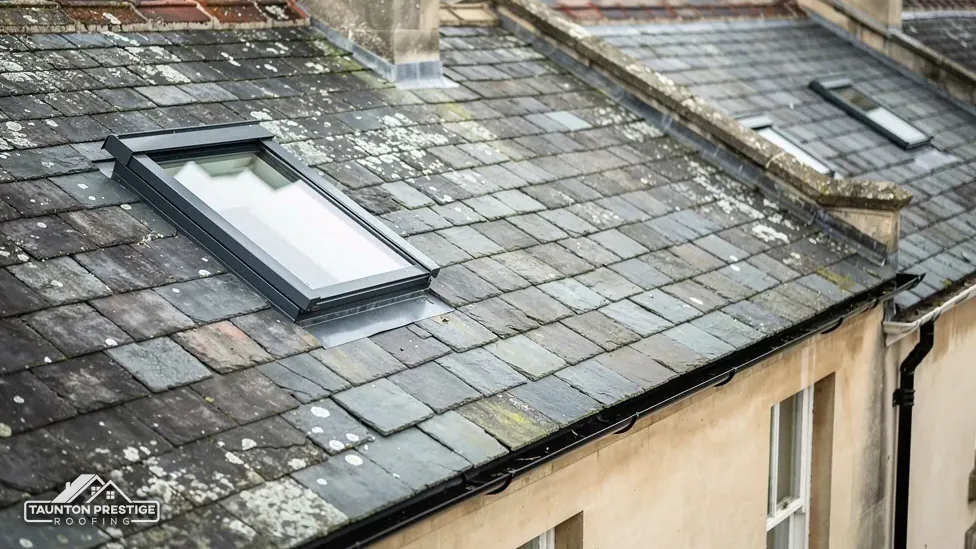
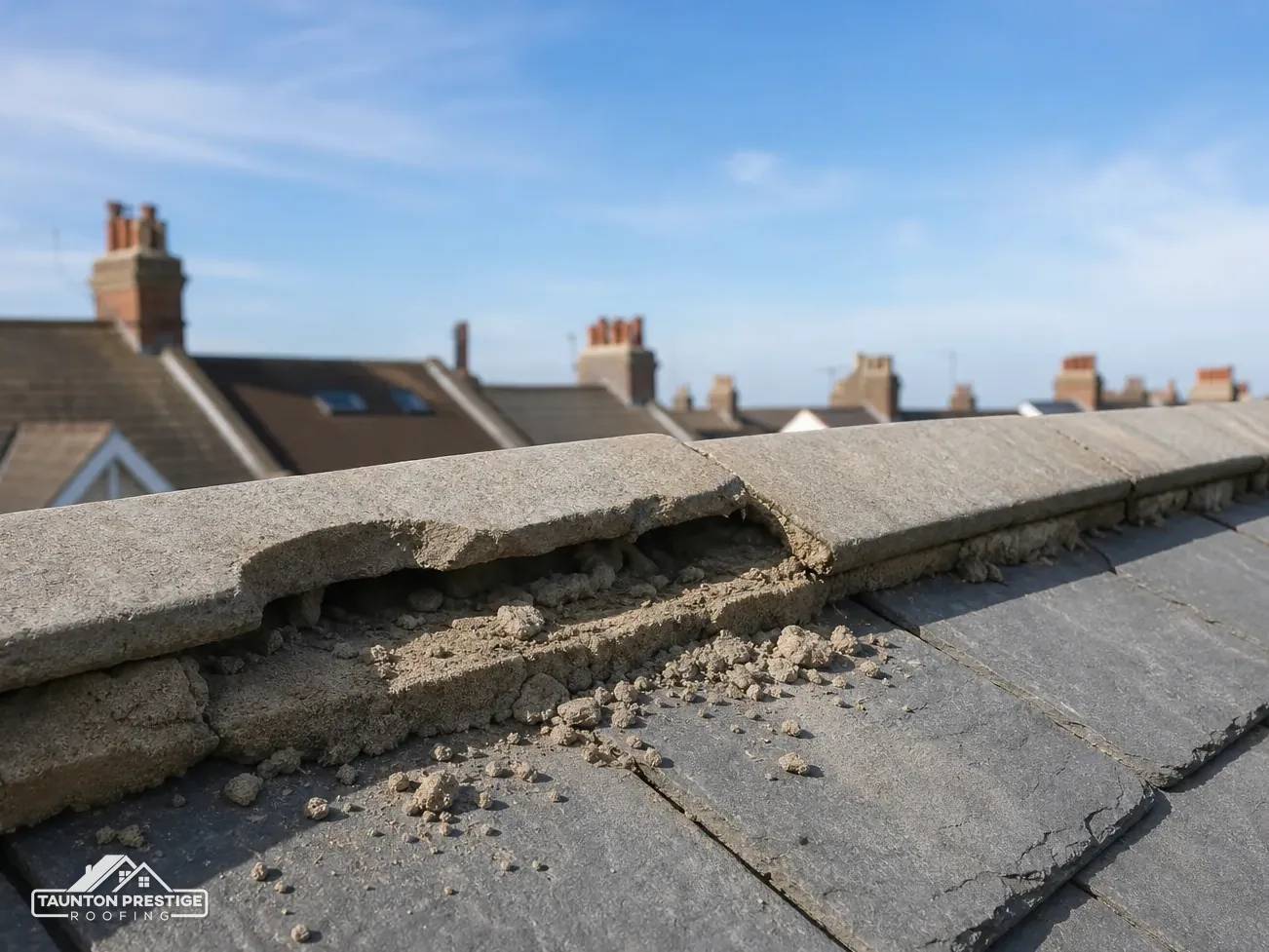
Where an extension sits below a slate or tiled main roof, the join between the two is a weak spot. The tiles above can shed water onto one strip of the flat roof and wear it faster than the rest, and the lead flashing along the join has to be in good order. Lead itself is long-lived, but the mortar joint that grips it weathers far sooner, so it is checked each time the flat roof is.
What decides the price
Under the waterproof layer is the deck: the boards that carry the covering, laid across timber joists. Older roofs may have chipboard or plywood decks, newer ones plywood or OSB, oriented strand board. When the covering fails, the deck takes the water. Wet chipboard swells, softens and in time sags between the joists. A spongy spot underfoot, or a dip you can see from an upstairs window, usually means the boards there have had it.
A roof that drips on a frosty morning yet stays dry in storms is condensing.
Look for
In a cold roof the insulation sits between or below the joists, under the deck, with a ventilated gap above it, so the deck itself stays at outside temperature. In a warm roof the insulation goes on top of the deck, under the waterproof layer, with a vapour control layer beneath it, so the deck and joists stay on the warm side. The cold roof is the older arrangement. It depends on air moving through small vents at the edges, and on small extensions and dormers that air path is easily blocked by insulation or a later ceiling. When we replace a flat roof deck, a warm roof build-up is usually what we recommend for that reason. Our guide to warm and cold flat roofs explains both build-ups in more detail.
Condensation. Warm, moist air from a kitchen or bathroom below rises through the ceiling, reaches the cold underside of the deck and turns to water. It can soak the insulation and drip from light fittings, and it is easy to mistake for a leak. The giveaway is dampness spread evenly, at its worst on cold, calm nights instead of in stormy weather. Designers work to BS 5250:2021, the moisture code, here.
Approved Document L lists replacing the waterproof membrane on a flat roof as renovation. Under Table 4.3 of the 2021 edition, a roof worse than 0.35 W/m²K is expected to be upgraded to 0.16 W/m²K, unless that is not technically or functionally feasible or would not pay back within 15 years, in which case it is upgraded as far as is feasible (para 4.13). Your building control body confirms what applies to your roof.
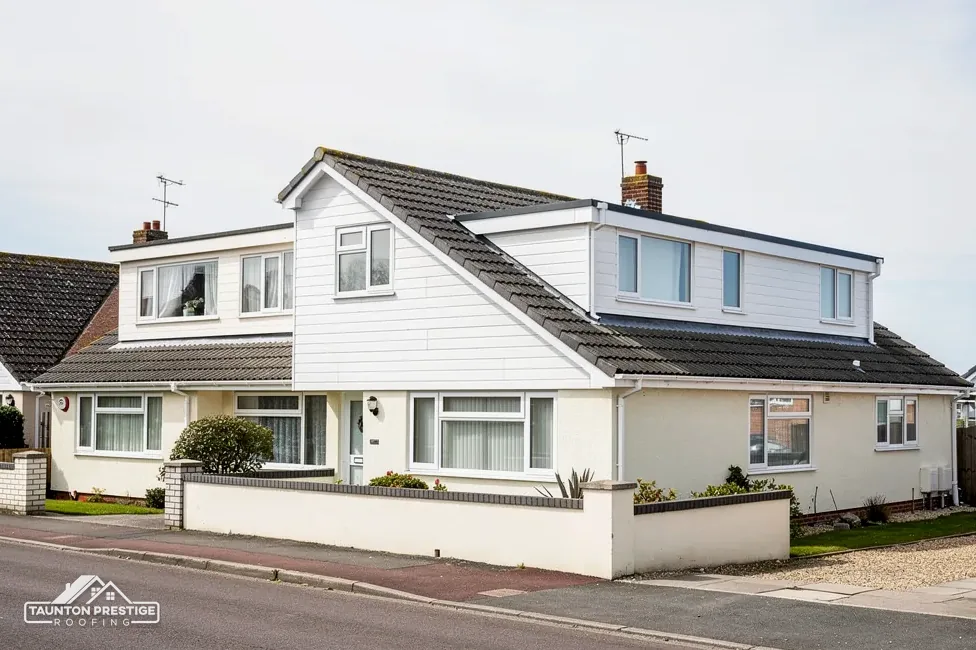
When the old covering is past saving, the choice comes down to three flexible systems. None is right for every roof. What decides it is the area and outline of the deck, how often it will be walked on for maintenance, how many pipes, roof lights and corners it has, and what sits next to it.
| System | What it is | Typical life | Suits |
|---|---|---|---|
| EPDM rubber | Synthetic rubber sheet bonded to the deck | 20 to 30 years (GreenSpec); 30 to 50 years (Less, Oct 2026) | Plain shapes with few pipes |
| GRP fibreglass | Resin and glass matting cured into one hard skin | 25 to 40 years (Less, Oct 2026) | Roofs with awkward corners and details |
| Torch-on felt | Reinforced bitumen layers fused with heat | 10 to 20 years (Less, Oct 2026) | Simple roofs on a tighter budget |
Sound or needs work
EPDM goes down quickly, often in one sheet, and copes well with a deck that moves a little through the seasons. It is a good fit for a plain rectangle with few pipes coming through. GRP is laid wet and cures into one hard, jointless skin that follows every corner and upstand, which suits a roof busy with roof lights, outlets and awkward junctions. It is less forgiving of a deck that flexes, so the boards beneath need to be firm and well fixed before it goes on. Both can be walked on with care for maintenance.
Modern torch-on felt is a long way from the thin black sheet on an old garden shed. Less says a good felt job can last 20 years while a poor one might fail in under 10, which says as much about the roofer as the product. Laying it means an open flame on the roof, so it needs care near timber and dry leaves, and some owners prefer a cold-applied system for that reason. Our guide to torch-on felt roofs weighs it up.
Small flat roofs over bays and porches on older houses were sometimes laid in lead, and lead can last for over 80 years (MyJobQuote). Zinc is the other long-lived metal: VMZinc cites a BRE Environmental Product Declaration of 100 years. Both are specialist work, and BS 6229 does not cover lead, so a metal roof follows its own guidance.
What decides the price
A new flat roof means stripping the old covering, checking the joists, replacing any soft decking, adding insulation where the rules call for it, and laying a new system with fresh trims, upstands and outlets. It is the right call when the deck is soft, the insulation is wet, the falls are wrong or the covering is failing in several places. It is the wrong call when one split on a sound roof would do, and in that case we recommend the repair.
Going by the Planning Portal, you normally need no building control application when less than 25 per cent of the total building envelope and less than 50 per cent of the roof is affected. Replacing the membrane also counts as renovation under Part L, so check before work starts. Somerset Building Control charges re-roofing as renovation of a thermal element when it is notifiable, and it publishes no re-roofing threshold of its own; its number is 0300 303 7790. Our guide to flat roof replacement and Building Regulations covers the detail.
Planning is simpler. On a house, a new roof covering is normally permitted development under Class C, though those rules do not reach a building containing flats. Listed homes need listed building consent as well, and in a conservation area ask Somerset Council's planning team first if the look of the roof will change. Inside Exmoor National Park, Exmoor National Park Authority is the planning authority.
We agree a start date, set up safe access and protect the garden and paths below. The old covering comes off a section at a time, the deck is checked and renewed where needed, and nothing is left open overnight. The new system goes on, then the trims, upstands, flashings and outlets, and the gutter is checked last. Scaffold standing on the pavement needs a scaffold licence (Highways Act 1980 s169) from the highway authority, arranged with the scaffolder before the start date. Waste leaves as the work goes, and at the end of each day we tell you what the next one holds. Rain stops the laying, because membranes and resins need a dry deck, so winter work goes ahead on dry days with the roof sheeted over between them.
If your flat roof is leaking or ponding, take a photo from an upstairs window and send it with your booking, so the survey visit starts in the right place.
What decides the price
Look for
Walked the roof?
Look from an upstairs window and from the room below, then leave the climbing, cutting and probing to us.
| Job | Typical range |
|---|---|
| Flat roof replacement | £1,500 to £6,000 |
| Garage flat roof, about 15 m² | £1,200 to £2,500 |
| EPDM rubber roof, per m² | around £60 |
| Felt roof replacement, average | around £1,500 |
Typical UK ranges from MyJobQuote (Oct 2026) and Less (Oct 2026), not our prices. We put your price in writing once we have surveyed the roof; check whether any quote includes VAT and scaffolding.
MyJobQuote and Less cost guides, Oct 2026
Short reads on single flat roof questions: falls and ponding, warm and cold build-ups, felt blisters, EPDM lifespans, patches, overlays and what Building Regulations ask of a replacement.
 How Much Does a Flat Roof Replacement Cost?Published guides put a flat roof replacement at £1,500 to £6,000 across the UK. This page shows where EPDM and felt sit within that, and what moves...
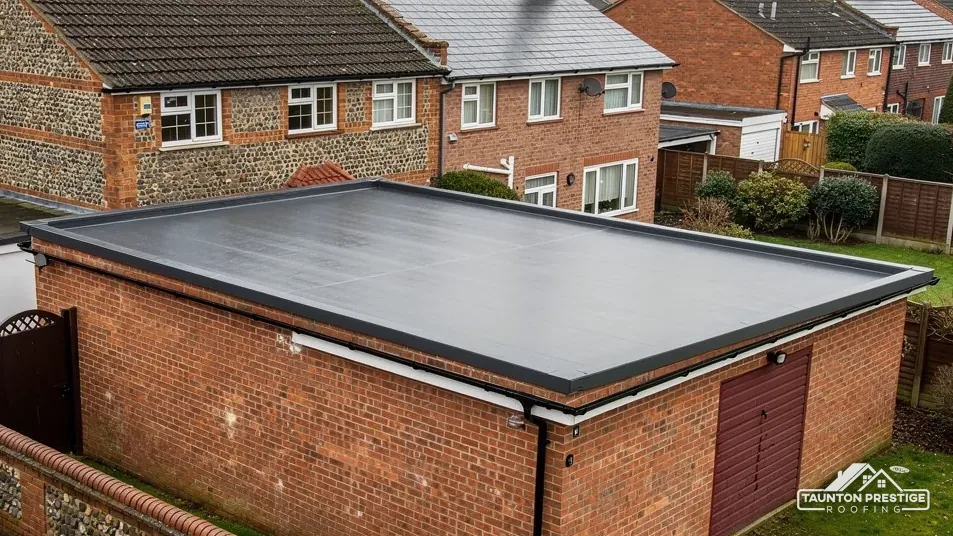 Warm Roof vs Cold Roof: Flat Roof Insulation ExplainedA warm and a cold flat roof differ in where the insulation sits, and that one choice decides how the roof handles moisture. Here are both build-ups...
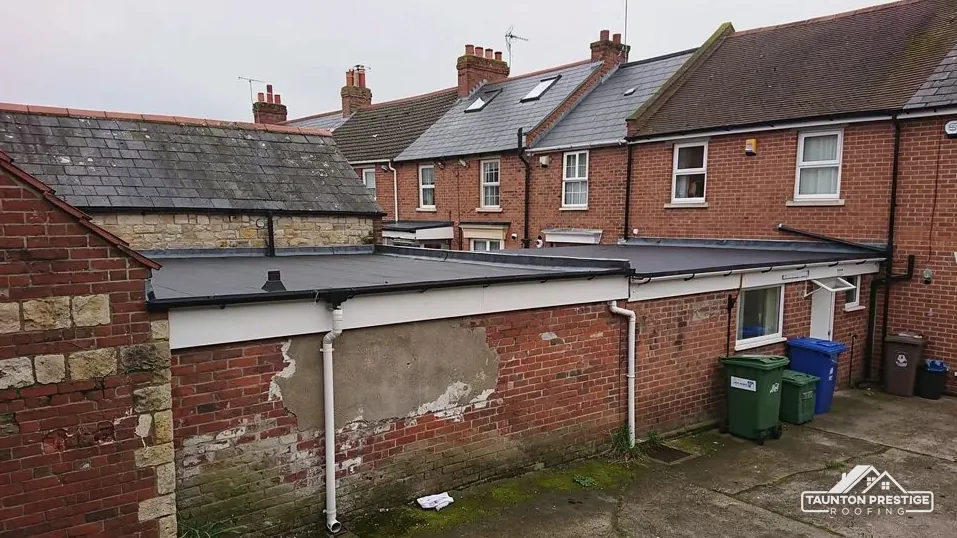 Flat Roof Replacement and Building RegulationsReplacing a flat roof deck or membrane sometimes needs building control and sometimes does not. This guide sets out the national thresholds exactly...
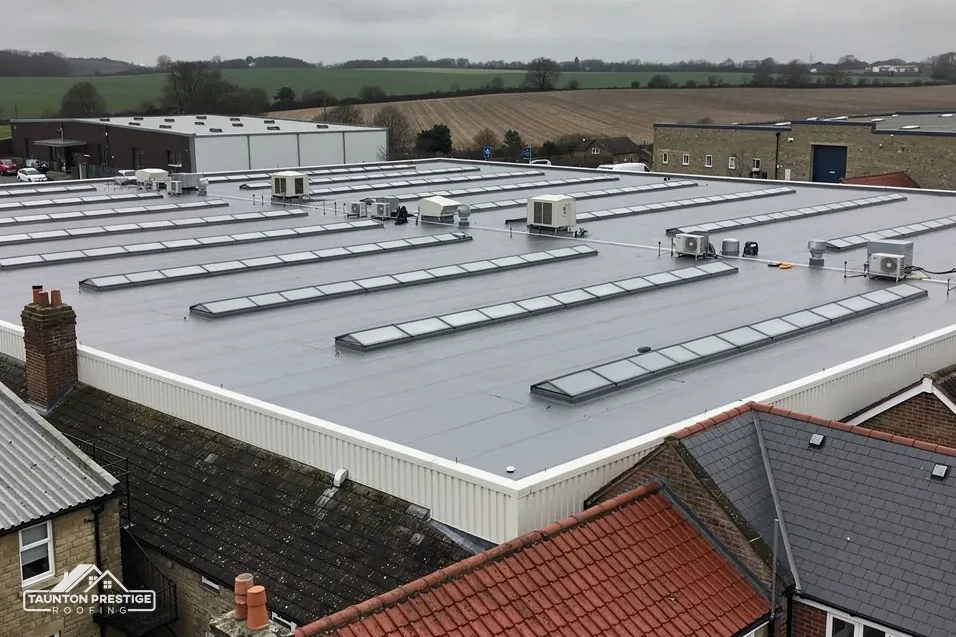 EPDM Rubber Roof Installation: What's InvolvedEPDM is a synthetic rubber sheet bonded over a flat roof. Here is what an installation involves, from the deck to the trims, and how long the...
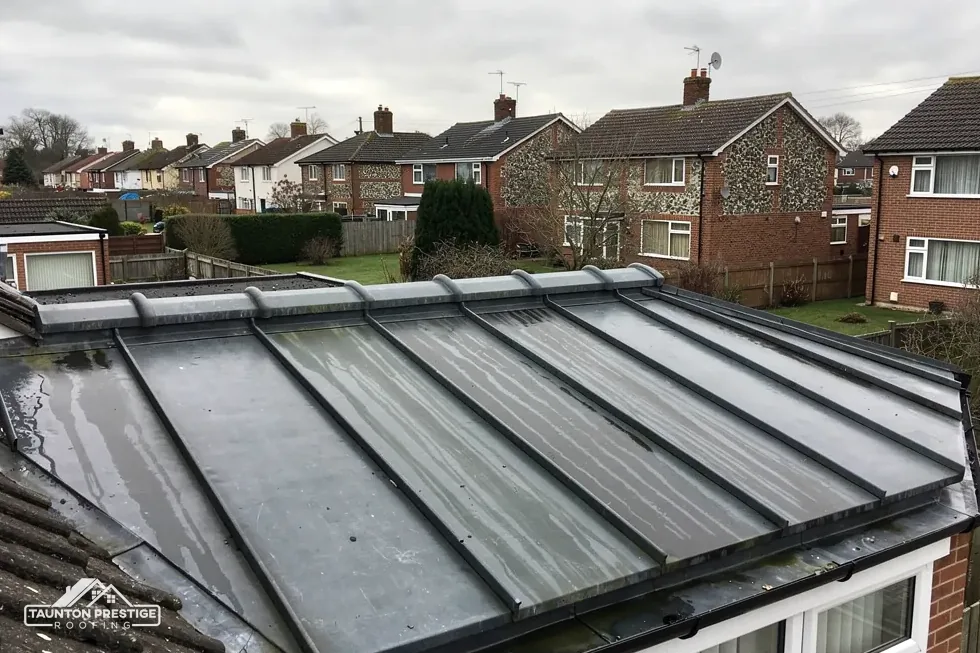 Torch-On Felt Roofs: Are They Still Worth Fitting?Torch-on felt has a dated reputation, but today's sheets are not the felt of old. Here is how it is laid, how long it lasts, what it costs and where...
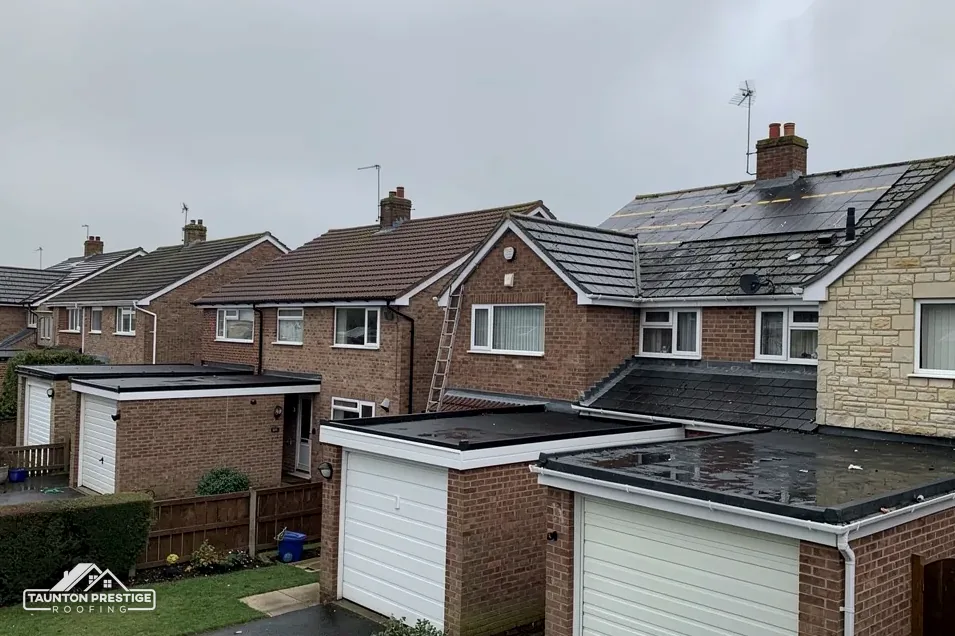 Flat Roofs on Dormers and Extensions: What to CheckA flat roof over a rear extension or a dormer fails at its edges long before its middle. This guide covers the joints, drainage and insulation to...
Of the three flexible systems, published figures put GRP at 25 to 40 years and torch-on felt at 10 to 20 years (Less, Oct 2026). EPDM figures differ: GreenSpec gives 20 to 30 years, Less 30 to 50. These are typical ranges, never promises; the deck, the falls and the quality of the laying matter just as much.
Yes. Water that gets behind an upstand or past a failed edge trim can run down inside a cavity or soak a timber wall plate, showing as damp on a wall well below the roof. That is why we check the edges, flashings and gutter as closely as the open roof, and look in the rooms below as well.
Keep outlets and gutters clear of leaves and moss, brush off debris that holds water, and look over the edges after a storm. Keep foot traffic to a minimum and never rest a ladder on the membrane. Spotting a lifted lap or a hairline crack early keeps the repair small and the deck dry.
Taunton with its suburbs and villages, plus the towns within about 30 road miles: Wellington, Bridgwater, the Quantock and Blackdown Hills villages, the Somerset Levels, and over the county line to Tiverton and Cullompton in Devon. We take on domestic flat roofs for homeowners and small commercial ones, from porches and dormers to shop and office roofs.
It should name the system to be laid, say whether the deck is being replaced and whether insulation is being added, and describe how the edges and outlets will be finished. Check whether VAT and scaffolding are included, and whether building control has been allowed for. A clear scope means no surprises halfway through the job.
Usually, yes. The old felt is stripped, the deck checked and renewed where needed, and the new system laid with its own trims and outlets. A change of system is a sensible moment to add insulation and correct poor falls, because the roof is already open down to the boards.
Send a photo of the flat roof from an upstairs window and we will book a time to survey it.