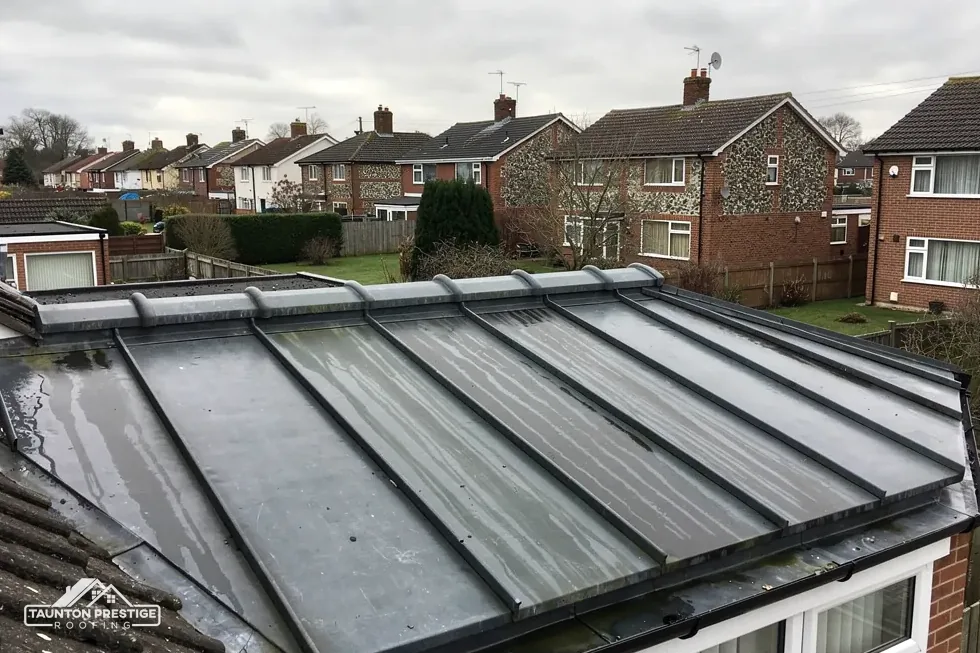
Code 4 lead
Blue-marked sheet, 1.80mm thick, for soakers, flashings and dormer cheeks.
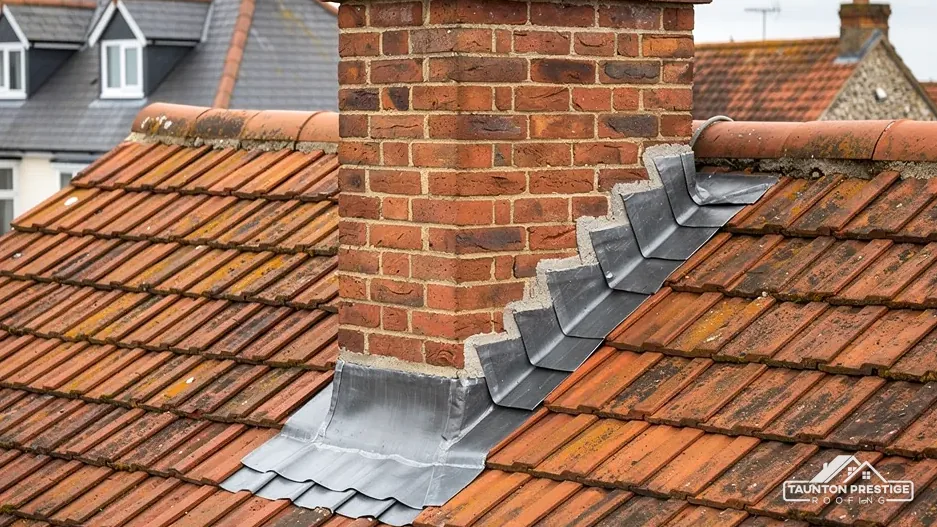
Flashings, valleys, bays and box gutters, dressed in lead.
We look at every piece of lead on your roof, show you photos of what we find, and price the repair or renewal it actually needs.
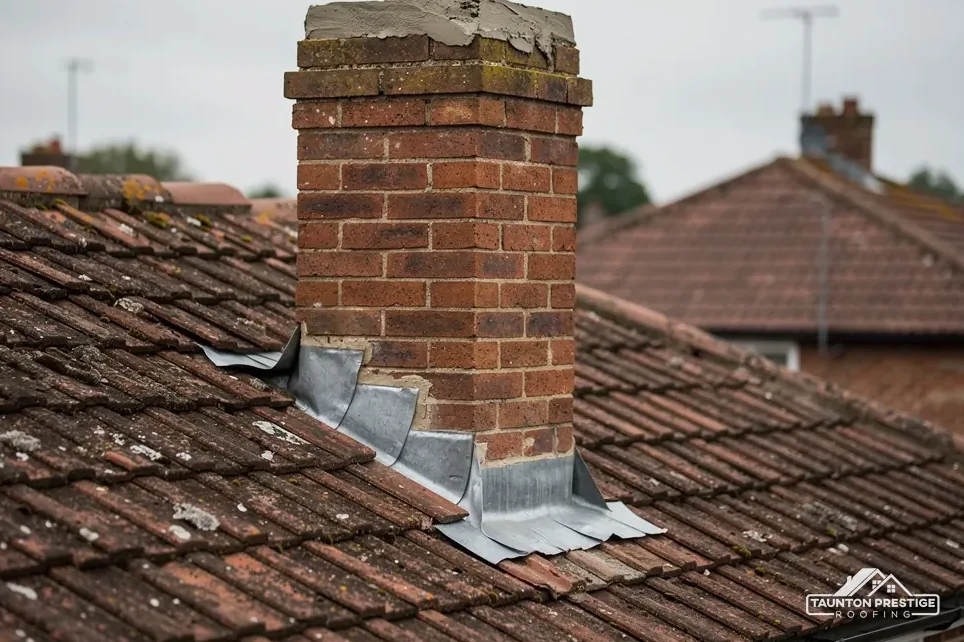
Blue-marked sheet, 1.80mm thick, for soakers, flashings and dormer cheeks.
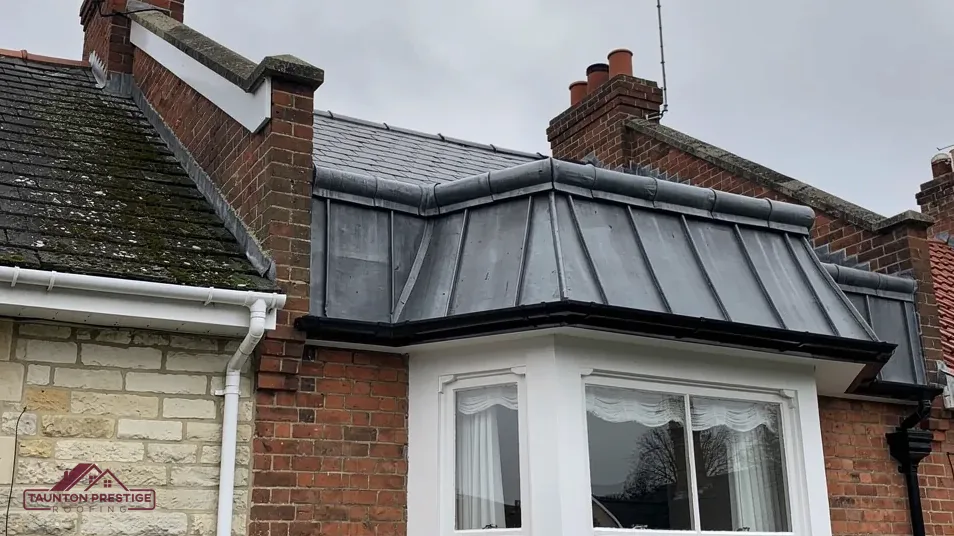
Red-marked, 2.24mm thick, for valleys, box gutters and parapet gutters.
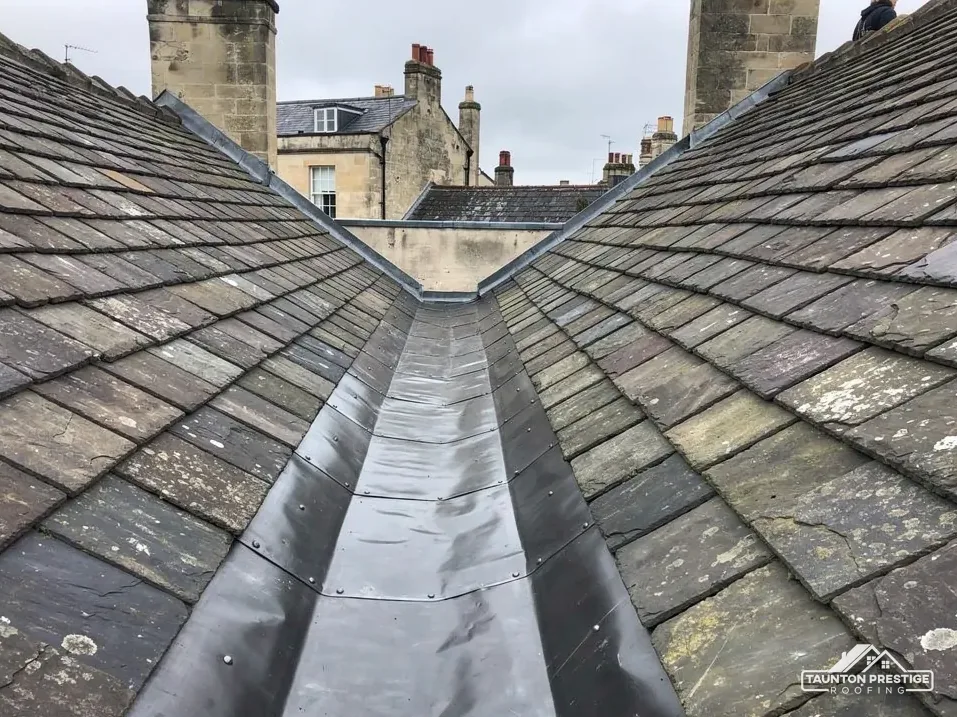
Codes 6, 7 and 8, thicker again, for valley and box gutters.
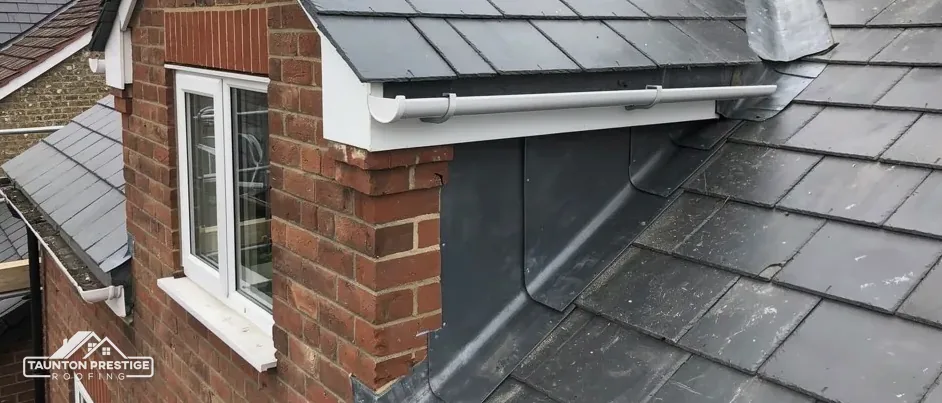 Flashing and liningAbutments, upstands and lead-lined joints renewed
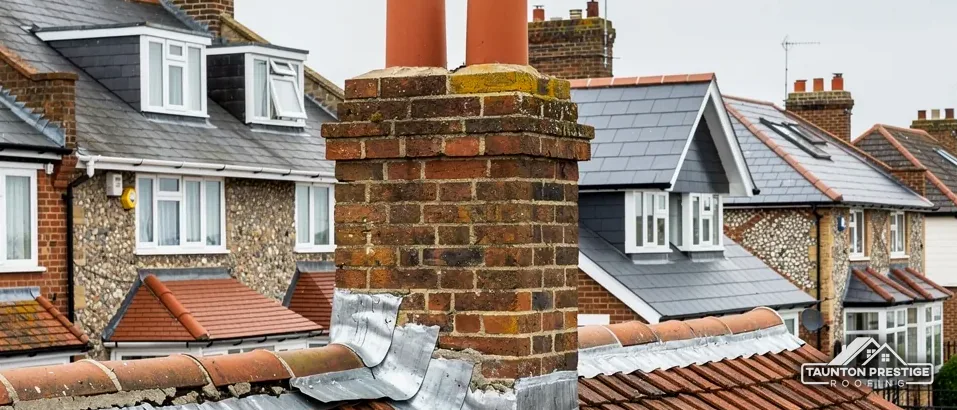 Chimney aprons and guttersFront aprons, steps and back gutters
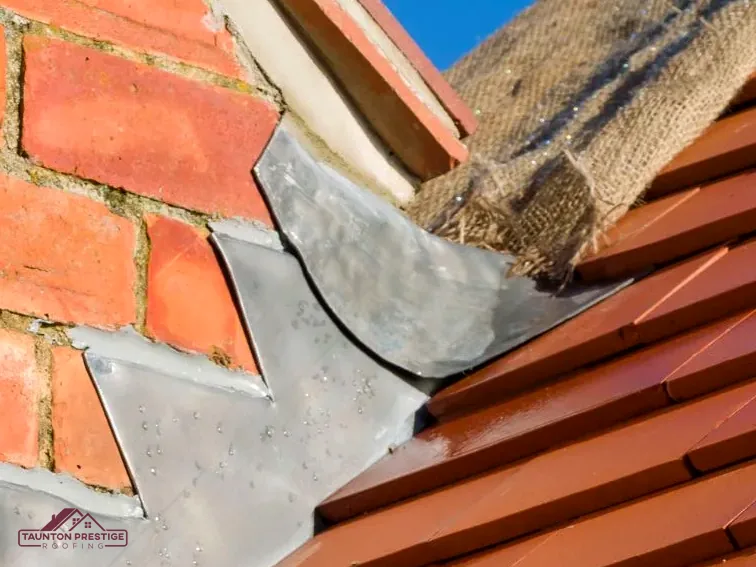 Lead valleysSplit linings stripped and laid again
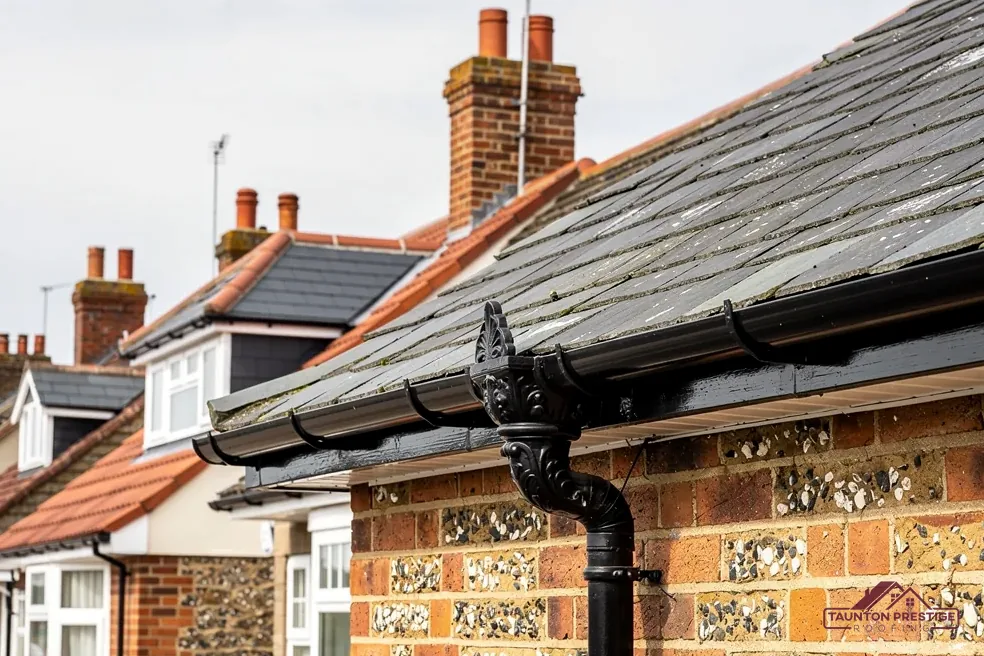 Box and parapet guttersRelined in a heavier code of lead
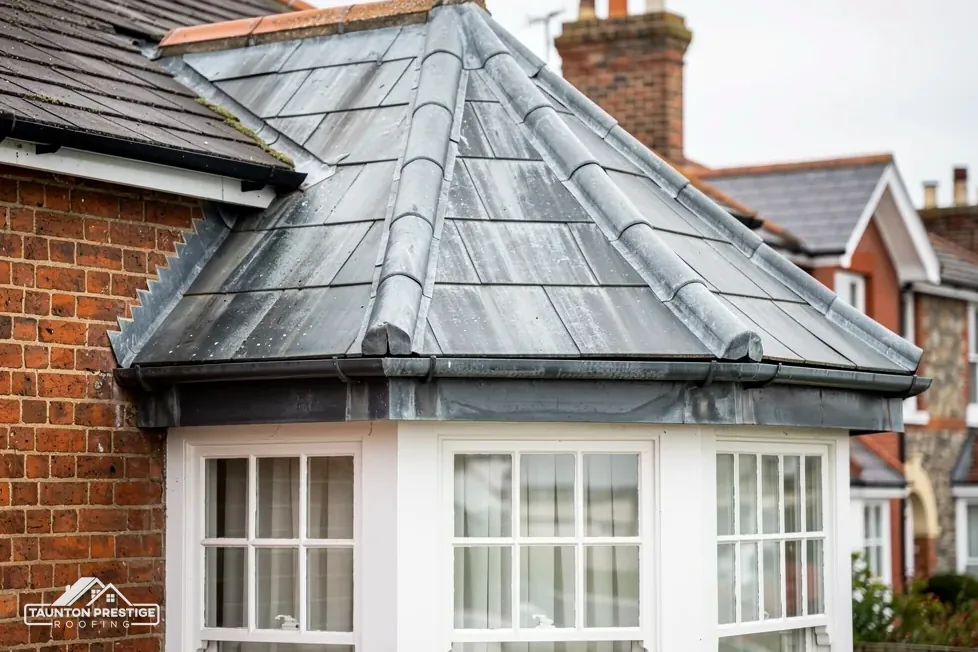 Bays, dormers and porchesLead roofs, lead cladding and lead ridges
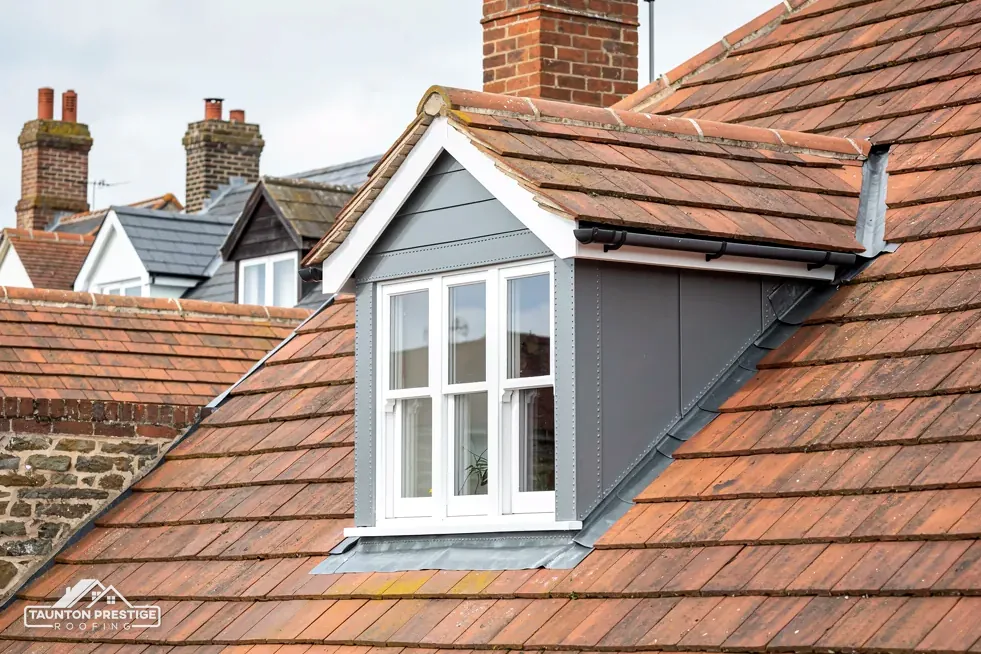 Heritage and ornamental leadworkPeriod details repaired to their pattern
The lead itself is sound but has lifted or slipped out of its joint.
One split or thin piece is cut out and a new length lapped in.
Splits in several places, or lead laid too large to move freely.
The lead walk
Where lead sits on a Somerset roof, how each piece fails, and what you can spot before anyone climbs a ladder.
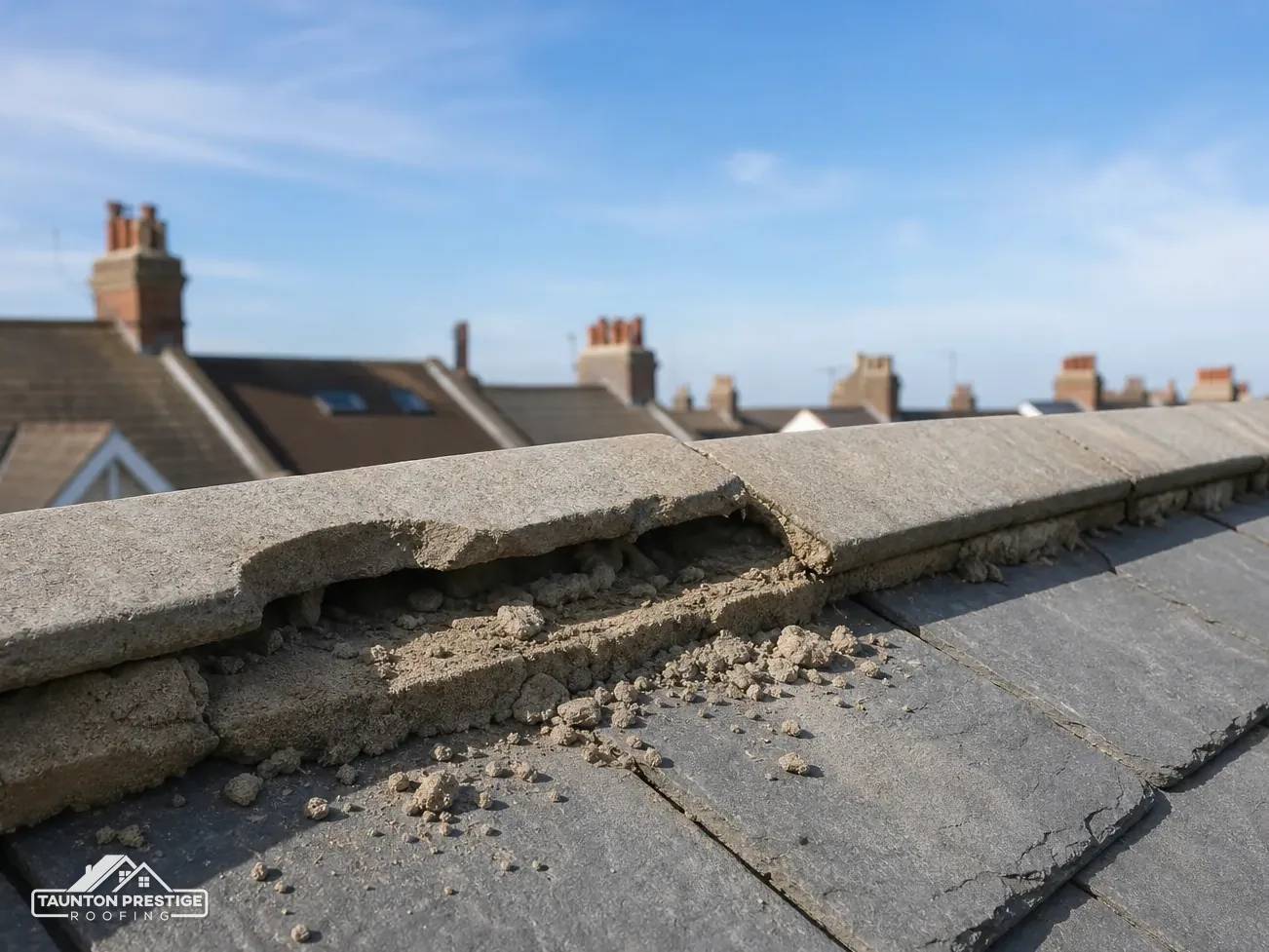
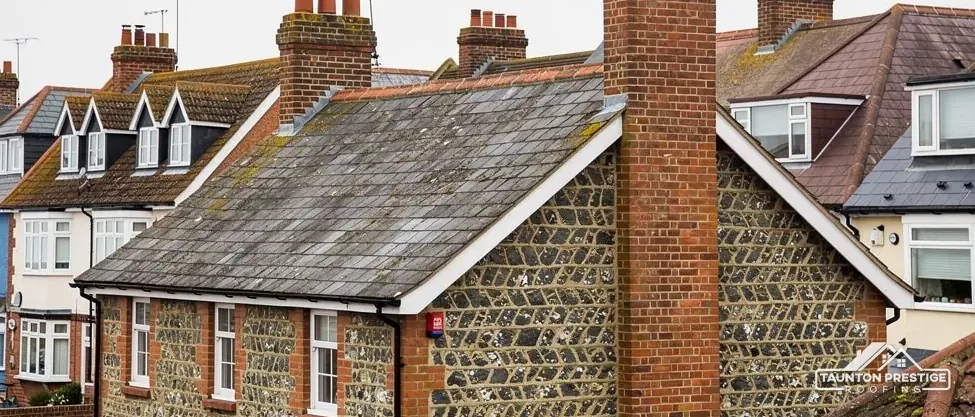
Lead work in Taunton covers far more than the strip around a chimney. Lead is the soft grey metal laid wherever a roof meets something that is not roof: a wall, a chimney stack, a window, the join between two slopes. A roofer cuts it from sheet, shapes it by hand to the brick or tile beneath, and dresses it so rain runs over the joint instead of into it. That job is called flashing, and the shaped lead that does it is a flashing. Lead also lines the channels that carry water off a roof and covers small flat roofs over bays, porches and dormers, which is where the older name lead roofing comes from.
Look for
Where slope meets brickwork, at parapets and chimneys, lead usually holds the rain back.
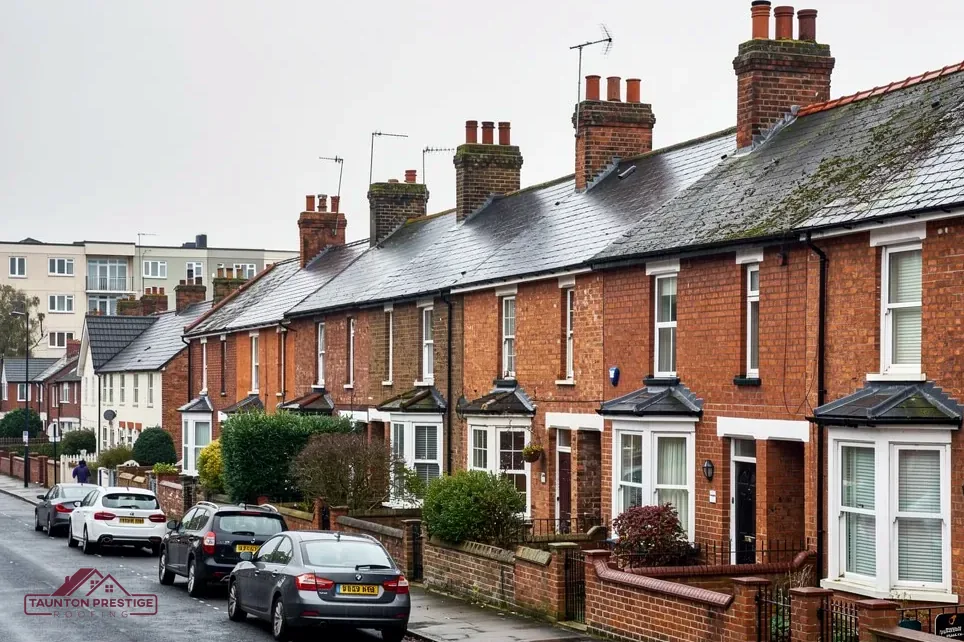
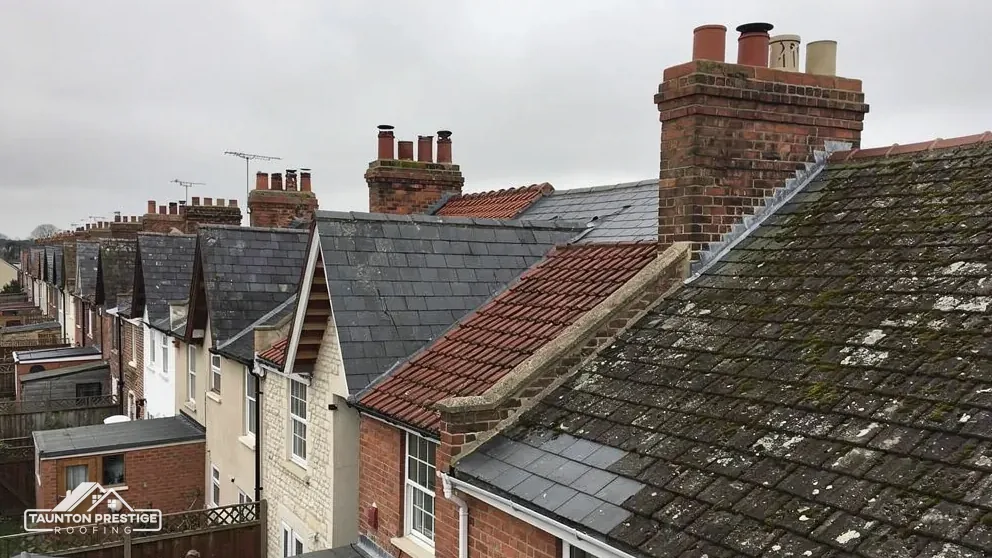
Leadwork is the name for all of it together: flashings, soakers, valleys, gutters, coverings and the decorative pieces on older houses. As a Taunton based roofer we find it on Victorian terraces, interwar semis, farmhouses out on the Levels and new builds on the edge of town, because every pitched roof with a chimney, an extension or a change of direction has a joint that needs closing. If your house has a chimney, a bay window or a roof that steps down to a kitchen extension, it has lead somewhere, even if you have never noticed it. Heritage properties carry the greatest variety of it.
Three things keep lead in use. It bends without cracking, so a skilled hand can work it into a step, a corner or the curve of a tile with no cuts for water to find. It is heavy, so it lies flat in a gale where a lighter strip would lift. And it lasts: according to MyJobQuote's leadwork guide, a lead flashing on a house roof can last for over 80 years. That long life depends on the fitting. Lead laid in pieces that are too big, nailed too tightly or left without a proper lap will split long before then, and a great deal of the leadwork repair we price comes back to how a piece was first put on, not to the metal itself. New lead starts bright and dulls to a soft grey that sits well beside slate and clay. When old lead comes off a roof, we take it away for recycling.
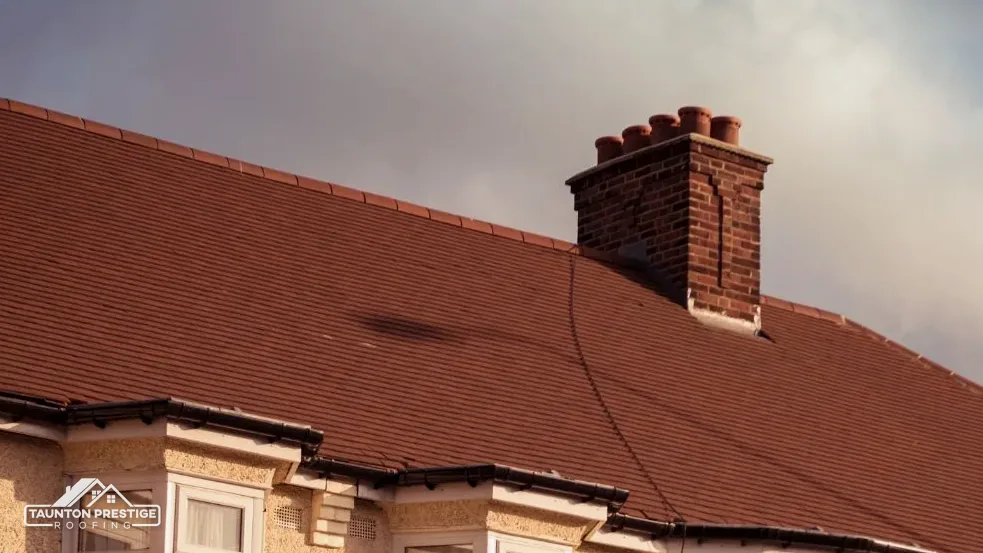
Chimneys carry a lot of lead, and a damp patch in an upstairs bedroom can often be traced to one. A chimney stack pushes up through the slope, so water arrives at it from three directions and has to be led round it. Four kinds of lead do that. The front apron is a single piece dressed over the tiles on the downhill face, with its top edge turned into the brickwork. Up each side run soakers, small folded pieces slipped between the courses of tiles or slates, with a step flashing cut to follow the mortar courses and dressed over them. On interlocking tiles the soakers give way to a one-piece side flashing dressed over the tile profile. Above the stack, where the slope rises, a back gutter collects whatever water comes down the tiles and sheds it left and right around the brickwork. Our answer on the chimney back gutter shows how that piece is formed.
Usually because one of those four pieces has moved. Lead is held into the brickwork by turning its edge into a mortar joint, a groove raked or cut out of the brick courses, then wedging it and pointing over it. When that pointing crumbles, the lead slides out of its slot and wind-driven rain gets behind it. A back gutter that silts up with moss and grit overflows behind the stack. A stack that has cracked, or lost its flaunching, the sloped mortar collar round the pots on top, lets water down inside the brickwork, where it comes out below the lead and looks like a flashing fault. We check all of those before blaming the lead, and work on the stack itself sits with our chimney repairs service.
For a week or a winter, perhaps. Mastic smeared along the top of a lead flashing hardens, shrinks and peels, and it holds water against the lead and the brick instead of shedding it. A proper fix chases the lead back into a sound joint, wedges it and repoints it in mortar. Our guide to sealant on lead flashing explains why the quick fix tends to come back. If someone offers to seal round a chimney without lifting a tile, ask what they will do about the joint.
What decides the price
Look for
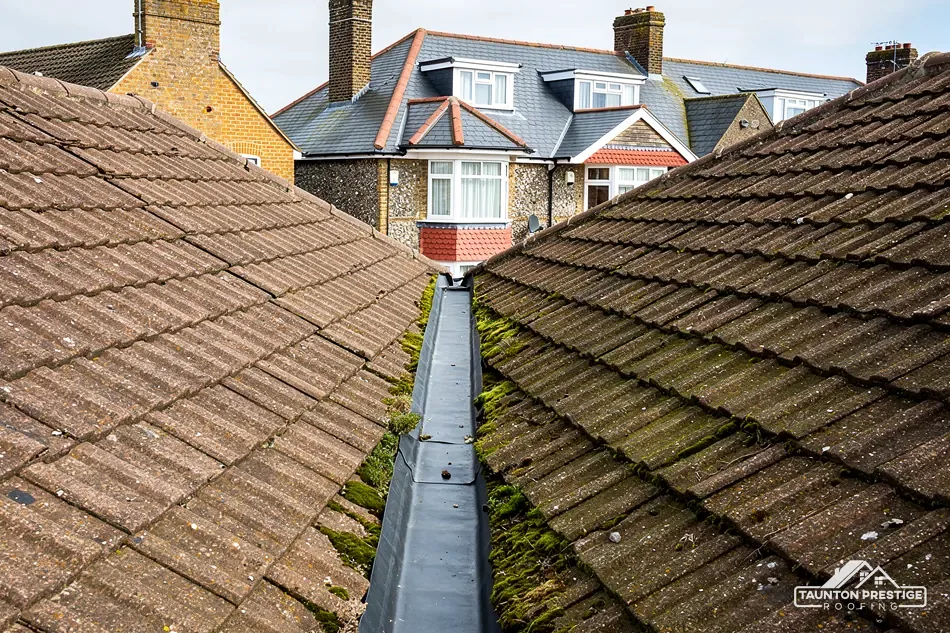
An abutment is any place where a roof slope meets a wall that carries on upward: a lean-to kitchen roof against the back of the house, a two-storey extension beside a bungalow, a dormer cheek, the end wall of a terrace that stands taller than its neighbour. A dormer has two such joints, one up each cheek, and a chimney on a side wall adds another. The joint between tiles and brick will never close by itself, so lead closes it. On a slate or plain tile roof the job is done with soakers and a stepped cover flashing. On larger interlocking tiles, which lie too thick and uneven for soakers, a single strip of lead is dressed down over the tile profile and its top edge stepped into the brickwork.
Sound or needs work
Look for
From the ground, look along the line where the roof meets the wall. Lead that has pulled out of its joint shows a dark gap above it. A flashing that has slipped lies loose on the tiles or lifts in a wind. Cracks show as fine dark lines, often near a fold or where the piece was nailed. Inside, a damp stain on the ceiling or the top of the wall next to that roof is the usual clue, and it tends to worsen in rain driven from one direction. Water from a roof leak at an abutment can run some distance along a rafter before dripping, so the mark on the ceiling can be nowhere near the fault, and we trace it back on the roof before we touch anything.
A stain beside an extension roof usually starts where the lead meets the house wall.
Often because the lead was never quite right. A cover flashing tucked into a groove too shallow to hold it, a lead strip stuck on with sealant, or soakers left out to save time all look fine on the day and fail within a few winters. Extensions also settle against the older house, and a joint that moves needs lead with room to move with it. A roof repair here means lifting the tiles along the wall, fitting soakers or a dressed strip in the right code, and chasing a new cover flashing into a proper joint. Our guide to soakers, steps and aprons sets out each flashing in turn.
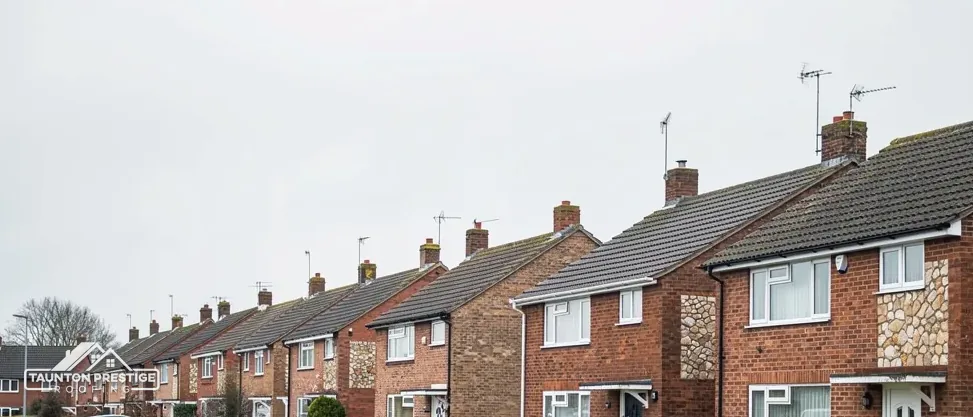
Where two roof slopes meet in an inside corner, they pour their water into one channel called a valley. On older slate and clay roofs that channel is lined with lead, laid on boards along the valley and lapped where one length meets the next, with the slates or tiles cut and laid over each edge. Not every valley is lead: a concrete-tiled roof may have a moulded GRP trough, and some clay roofs turn the corner with purpose-made valley tiles. Each is repaired in its own material. A box gutter is a lead-lined trough, often hidden behind a parapet wall or sitting between two roofs on a terrace, that collects water and leads it to an outlet. Both handle more water than a flashing ever sees, so both are lined in heavier lead.
The valley lead takes everything both slopes send it, plus moss, leaves and grit. Lengths laid too long can split as the metal warms and cools, because the fixings stop it moving. Laps that are too short let water ride back up under the next piece in a storm. Where tiles or slates sit tight against the lead, debris builds up and the channel narrows, and a choked valley overflows under the tiles on either side. We clear valleys on every visit and look at the laps as we go, because a valley that drains freely lasts far longer than one left full of leaves.
A box gutter needs a fall, a slight slope, to reach its outlet, and a series of small steps called drips where one length of lead ends and the next begins, so each piece can move on its own. When an outlet blocks, or old lead has sagged into dips that hold water, the gutter fills and spills over its upstand into the roof void or down an inside wall. Parapet and box gutters are often out of sight, which is why a full one can go unnoticed until a ceiling marks. As a typical UK figure, MyJobQuote puts a full roof valley replacement at around £540 (Sep 2026). Length, access and whether the tiles or slates along each side lift cleanly move that figure for a given roof.
What decides the price
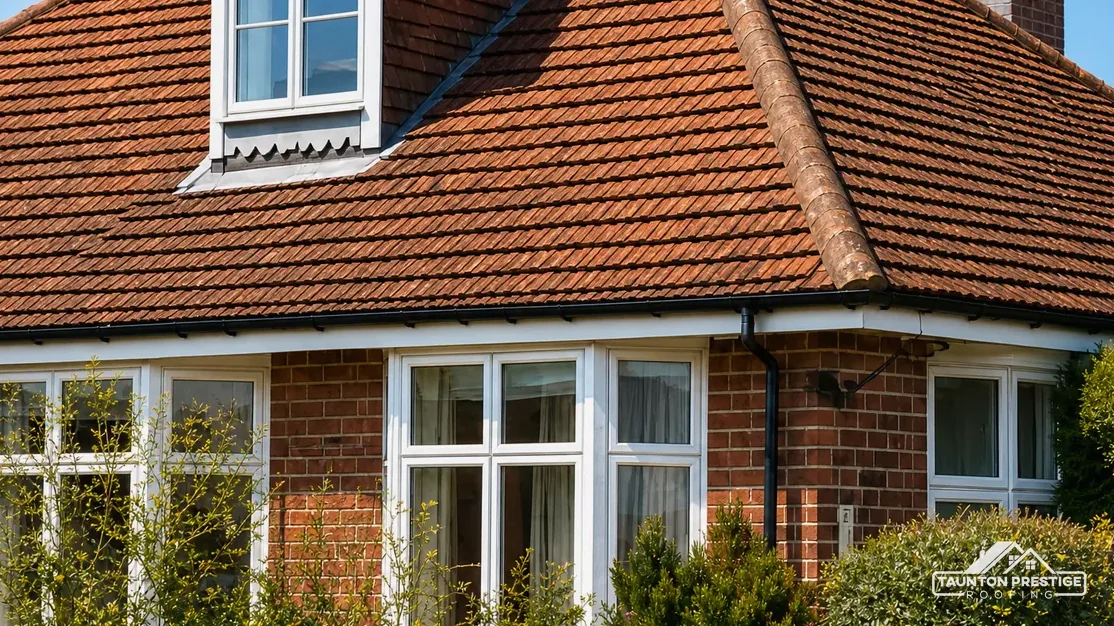
Bay windows, porches and dormers on older houses often carry a small flat or gently sloping roof covered entirely in lead. The sheet is laid over boards in separate pieces, called bays, joined by rolls, rounded timber battens the lead is dressed over, and by drips where the roof steps down. Lead ridges and hip rolls finish the top edges of some bays, and the cheeks, the triangular side walls of a dormer, are often faced in lead cladding. A dormer roof may be lead on top, with cladding down both cheeks and a lead apron across the front where it meets the main slope. Each piece is fixed along one edge and left free at the others, so it can expand and contract in the sun without tearing.
Lead that cannot move as it warms will tear itself, however neatly it was dressed.
Look for
Every lead sheet carries a code number standing for its weight and thickness, plus a colour mark so the code can be read on site. The table follows Royston Lead's cast lead brochure.
| Code | Thickness | Weight | Listed uses |
|---|---|---|---|
| Code 3 (green) | 1.32mm | 14.97 kg/m² | Soakers only |
| Code 4 (blue) | 1.80mm | 20.41 kg/m² | Soakers, flashings, pitched valleys, dormers |
| Code 5 (red) | 2.24mm | 25.40 kg/m² | Flashings, valleys, parapet and box gutters, dormers |
| Code 6 (black) | 2.65mm | 30.05 kg/m² | The same uses as Code 5 |
| Codes 7 and 8 (white, orange) | 3.15mm and 3.55mm | 35.72 and 40.26 kg/m² | Valleys, parapet and box gutters, dormers |
Our guide to lead codes goes through each one in more depth. Thicker codes cost more per square metre, but they let a roof be laid in fewer, larger pieces with fewer joints to fail.
Heavier lead copes with larger pieces, and thinner lead must be cut smaller, because a big sheet of thin lead fixed all round has nowhere to go when it warms. It ripples, then cracks along the ripple. BS 6229:2025, the code of practice for flat roofs, covers flexible waterproof membranes rather than lead, so a lead bay is set out to lead sizing and fixing practice instead. Our page on lead on bay windows and dormers covers repairing and renewing these small roofs.
Look for
Heritage leadwork is lead on a building whose age, listing or setting gives it extra protection: the hood over a period doorway in a conservation area, the lead flat behind a parapet on a listed town house, the roof of a village church in the Quantock or Blackdown Hills. The craft is the same, but the rules on what can change, and who agrees to it, are different. Ornamental leadwork, such as finials, lead-covered domes and patterned cappings on period porches, is repaired and re-dressed to the pattern already there, so the detail survives the repair. Before old lead comes off a heritage roof we photograph and measure how it was laid, so the new work follows the same joints. Ask before anything decorative is stripped, because a lost piece is hard to replace.
A listed house keeps its permitted development rights for roof work, but listed building consent is needed as well for works that would affect its character as a building of special architectural or historic interest. Renewing lead like for like, in a matching code and detail, is very different from swapping lead for another material, and only the planning team can say which side of the line a job falls. Taunton has several conservation areas, among them St Mary and St James, designated 15 January 1975 and revised 26 April 2007. In a conservation area, speak to Somerset Council's planning team before you alter how a roof looks from outside; inside Exmoor National Park, ask Exmoor National Park Authority instead.
It depends on the church. A Church of England church in use goes through the faculty system. Roman Catholic, Methodist and United Reformed churches, and Baptist churches held by a Schedule 1 trust corporation, use their own approval systems. Unitarian and Quaker meeting houses, closed churches and converted chapels need listed building consent where they are listed, and a scheduled monument needs scheduled monument consent. Our answer on church roof repair consent sets the routes side by side. Where the church has an architect or surveyor, we work to their specification and keep them told of what we find.
A good deal of old lead can be saved. Flashing that has slipped out of its joint but is otherwise whole can be lifted, re-dressed and chased back in. A single split in a valley can sometimes be cut out and a new length lapped in. What cannot be saved is lead that has cracked in several places, worn thin, or been cut too large for its code, because the same faults will come back however neatly it is patched. Our roof repairs start by telling you which of those you have, with photos of each piece, so you can see the split or the gap for yourself.
Sound or needs work
Usually it should be. When the slates or tiles come off, soakers, valleys and abutment flashings are exposed and often disturbed, and old lead that has been bent back once does not take kindly to being dressed again. Old soakers are rarely worth saving once lifted, and valley lead that has been walked on and patched over the years is better replaced while it is exposed. A re-roof is also the best-value moment to renew lead, because the scaffold is already up and the tiles beside each joint are off. Our roof replacement service covers whole-roof work, and the new lead is part of that one total.
Access comes first: a bay roof can often be reached from a ladder or tower, while a chimney on a tall terrace needs scaffold. Then the amount of lead, the code it needs, and how many tiles or slates must come off to reach it. New lead is often given a wipe of patination oil, which helps it weather evenly instead of streaking the wall below. We cover Taunton and the villages around it, out to Wellington, Bridgwater and the Devon edge, for homeowners and small commercial buildings alike. Lead on shop parapets, offices and farm buildings is handled the same way: we look, photograph and explain before anything is priced.
Before you book, work out where the water shows, which room and in what weather, and tell us when you arrange the inspection, so we can go straight to the right piece of lead.
What decides the price
Look for
Walked the roof?
Look from the garden and the loft first, note the room and the weather when water shows, and let us handle anything that needs a ladder.
| Job | Typical range |
|---|---|
| Patch repair to chimney leadwork | £150 to £250 |
| Full chimney leadwork replacement | £350 to £920 |
| Full roof valley replacement | around £540 |
| Front scaffold, one week's hire | £550 to £750 |
Typical UK ranges from MyJobQuote, not our prices, and the chimney figures move with scaffold. Your written price follows our survey; whoever quotes, check that the figure includes VAT and scaffold.
MyJobQuote cost guides, Sep and Oct 2026
Single questions about lead, answered in full: codes, flashing types, why sealant fails, bays and dormers, back gutters, church consent and what leadwork costs.
 How Much Does Leadwork Cost?Access moves a leadwork price more than the metal does. Here are published UK ranges for chimney flashings and valleys, and the factors behind them.
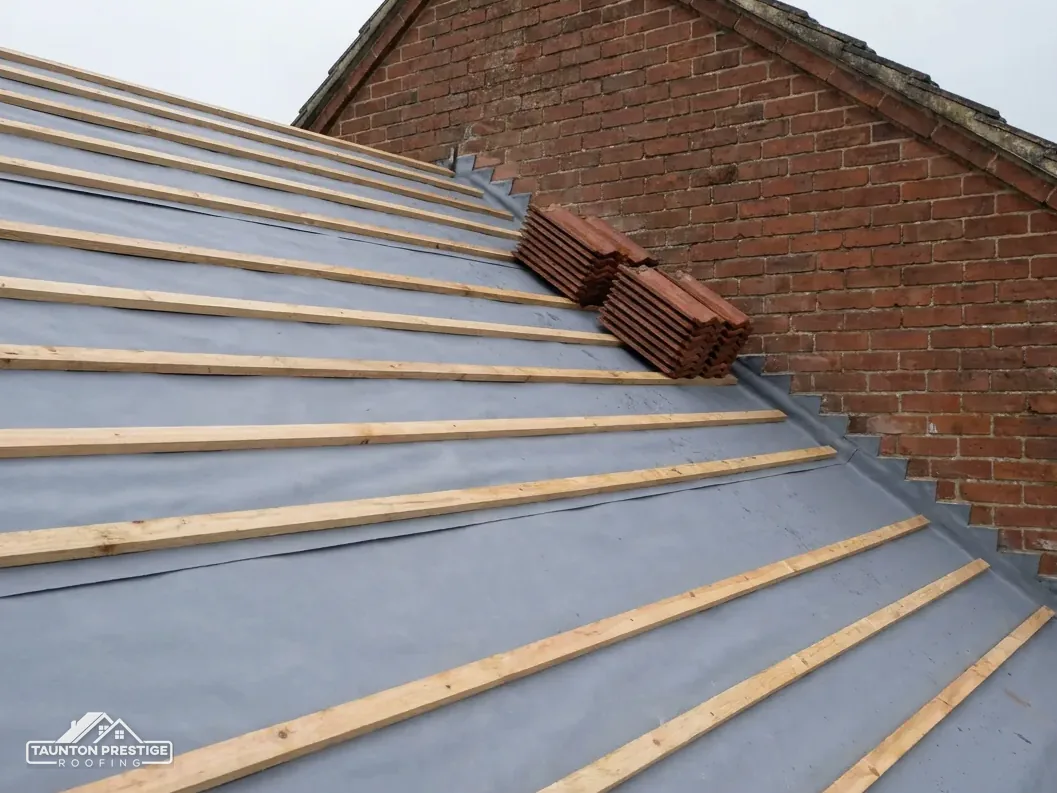 Lead Codes Explained: Which Code Goes WhereLead sheet comes in numbered codes, and each number tells you how thick and heavy it is. Here is what each code from 3 to 8 is used for.
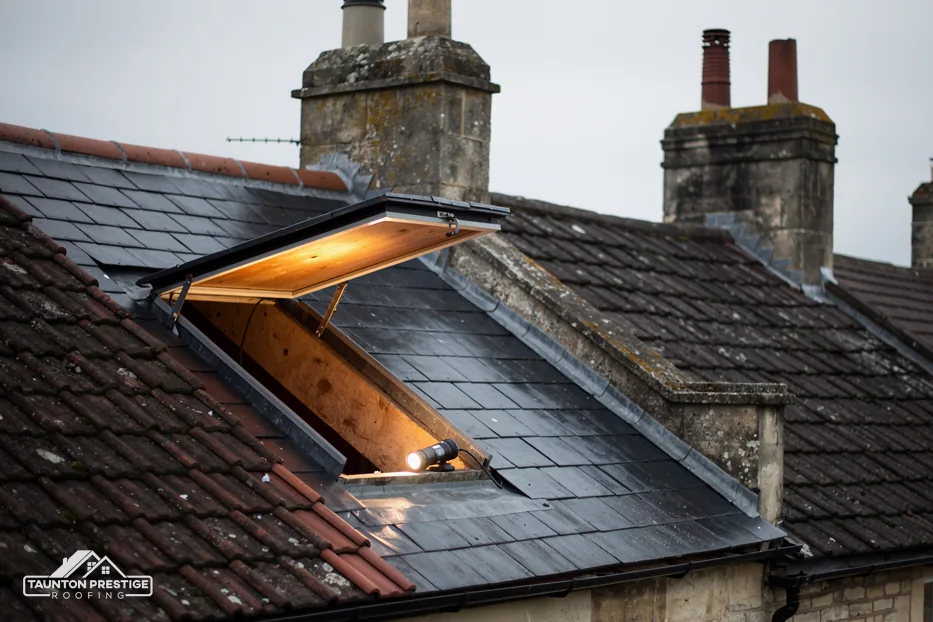 Lead Flashings Explained: Soakers, Steps and ApronsLead flashing is a family of separate pieces, each with its own place and job. Here is each one explained and where to find it on a house.
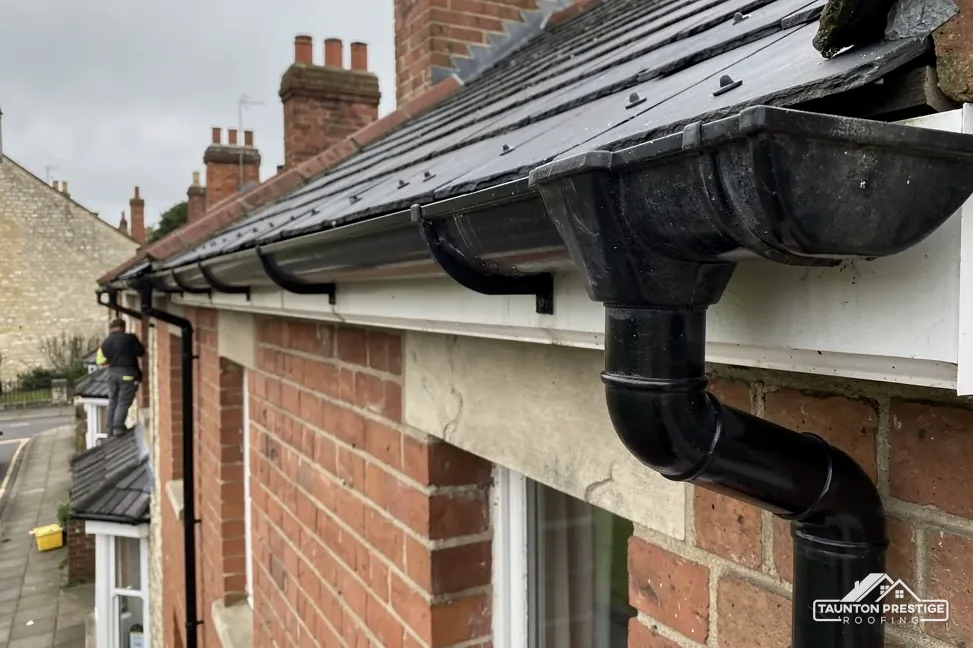 Why Sealant Won't Fix Failed Lead FlashingA bead of sealant along a leaking flashing looks like a quick fix. This guide explains how lead is meant to be held, and why a coating cannot do that...
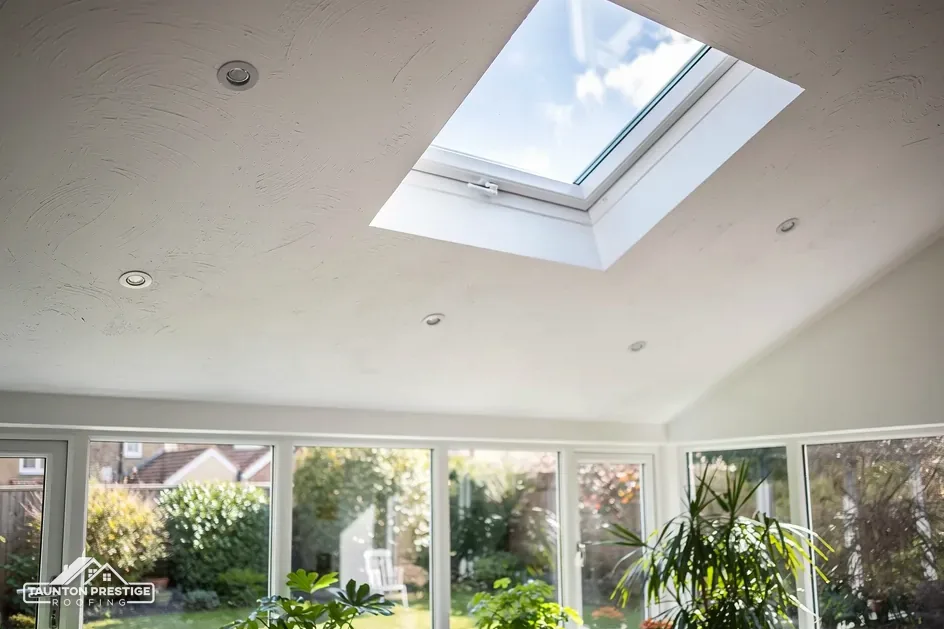 Lead on Bay Windows and Dormers: Repairs and RenewalBay roofs and dormer cheeks are small areas of lead that do a great deal of work. Here is how they fail, which lead suits them and what renewing them...
 Lead vs Zinc for Bays, Dormers and Flat RoofsBoth metals can cover a bay, a dormer or a small flat roof. This guide sets out how long each is published to last, how they differ and where each...
Royston Lead's brochure lists Codes 4, 5 and 6 for flashings, and keeps Code 3 for soakers only. Code 4 suits step and cover flashings on a house, and a heavier code can suit a long run or an exposed stack. We match the code to the job and tell you which one we are fitting.
MyJobQuote's leadwork guide puts it plainly: lead flashing can last for over 80 years, and we treat that as a lower bound, never a promise. The fitting decides how close a piece gets: the right code, sensible lengths, proper laps and a sound mortar joint. Lead that splits young has generally been laid too big or fixed too tightly.
Often it can be repaired. Lead that has slipped out of its joint can be re-dressed and chased back in, and a short split can be removed with a fresh length of lead lapped over the gap. Lead cracked in several places, worn thin or fitted far too large is better renewed, because patches will not cure the cause.
Yes. The craft is the same, but consent comes first. A listed house needs listed building consent for works affecting its character, a Church of England church in use goes through the faculty system, and some other denominations have their own routes, though Unitarian and Quaker buildings need listed building consent. We record the existing detail and match the code and joints when we renew.
As a typical UK range, MyJobQuote puts a patch repair to chimney leadwork at £150 to £250 and full replacement at £350 to £920 (Sep 2026), with scaffold making the biggest difference. The height of the stack, the number of pieces and the state of the brickwork set the figure for your own chimney.
Keep valleys, box gutters and chimney back gutters clear of moss and leaves, because blocked lead overflows. After a gale, check the flashings with binoculars for lifted edges. Never let anyone smear mastic over a split, since it traps water. And have the lead looked at whenever the roof has scaffold up for other work.
Tell us which chimney, valley or bay is letting water in, and we will inspect that lead first.